

Spend over S$10,000 on a Rolex, and it can still develop scratches. That reality tends to catch people off guard, especially when they’ve heard so much about Oystersteel and its reputation for superior durability over regular stainless steel.
The truth is more nuanced. 904L stainless steel does offer real advantages in corrosion resistance, polish, and long-term finish quality. But scratch resistance is a different story. It comes down to hardness, surface finishing, and how you actually wear the watch, not which grade of steel is stamped on the caseback.
So, does Rolex’s choice of 904L give it a real edge in everyday durability? That depends on what you’re measuring. In this article, you’ll find out how the two steels compare, what the numbers say about hardness, and what you can actually do to keep your watch looking cleaner, longer.
Is 904L More Scratch-Resistant Than 316L
No, 904L is not significantly more scratch-resistant than 316L in normal daily watch wear. In the 904L vs 316L scratch resistance debate, both types of stainless steel can still develop desk-diving marks, clasp scratches, fine hairlines, and swirl marks on a polished surface.
The real strength of 904L steel is its corrosion resistance. Although 316L stainless steel is already corrosion-resistant, 904L stainless steel is better suited for extended exposure to seawater, sweat, and humid conditions. This is one reason Rolex began introducing 904L in 1985, especially for professional dive watches where pitting resistance mattered.
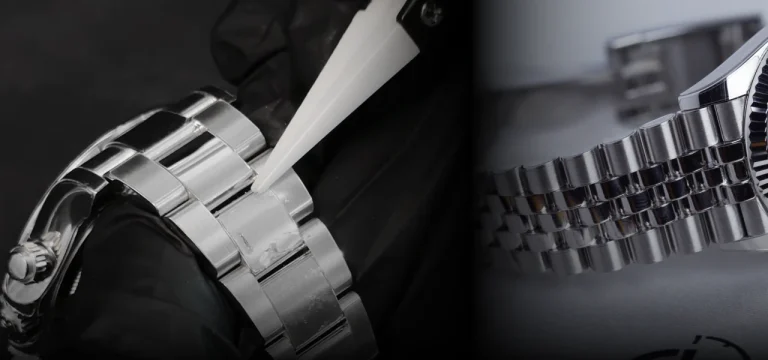
Rolex now calls its 904L steel Oystersteel, and it is known for taking on a bright, premium polish. However, this sheen can also make fine marks easier to notice. Highly polished Oystersteel surfaces reflect light sharply, so a Rolex may appear to scratch more easily than a 316L watch, even when the practical difference in scratch resistance is small.
What Is 316L Stainless Steel
316L stainless steel is a marine-grade steel commonly used in luxury watches, tool watches, and everyday steel watches. It is one of the most popular types of stainless steel in the watch industry because it offers a strong balance of durability, corrosion resistance, machinability, and cost.
The “L” stands for low carbon. This helps reduce certain corrosion issues that can happen during manufacturing, especially when steel is welded or exposed to heat. For watch owners, the result is a reliable grade of steel that holds up well against sweat, humidity, and normal daily wear.
Many respected watch brands use 316L steel successfully because it is tough, practical, and more than enough for most wearers. It may not have the same marketing appeal as 904L steel, but it remains a proven choice in watchmaking.
What Is 904L Stainless Steel
904L stainless steel is a high-alloy austenitic stainless steel with higher levels of nickel, chromium, molybdenum, and copper than 316L. These elements help make 904L more corrosion-resistant, especially in harsh environments.
Rolex calls its version of 904L steel Oystersteel. Before Rolex adopted it, 904L was already used in demanding industrial environments due to its strong resistance to corrosion, acids, and seawater exposure.
In the watch industry, Rolex helped popularise the use of 904L, especially in professional sports models. Its main appeal is not that it is much harder than 316L, but that it offers excellent corrosion resistance and a bright, premium polish.
316L vs 904L Stainless Steel in Watches
When comparing stainless steel watches, 316L and 904L are the two most commonly discussed grades. Each offers distinct advantages in terms of durability, corrosion resistance, and finishing, making them suitable for different types of watches and wearers.
At a Glance
| Feature | 316L Stainless Steel | 904L / Oystersteel | What It Means for Watch Owners |
| Scratch resistance | Good daily resistance | Similar daily resistance | Both show hairlines and desk-diving marks |
| Surface hardness | Durable for normal wear | Comparable hardness to 316L | 904L does not make a watch scratch-proof |
| Corrosion resistance | Strong | Stronger | 904L is better for sweat, humidity, and seawater exposure |
| Pitting resistance | Good | Better | 904L has an edge in harsher, chloride-rich conditions |
| Nickel content | Lower | Higher | May matter for people with nickel sensitivity, reactions depend on nickel release, not total content |
| Polish and shine | Clean, versatile finish | Brighter, more premium sheen | Rolex Oystersteel looks slightly more refined |
| Machining difficulty | Easier to machine | Harder to machine | 904L can add complexity to production |
| Cost | Generally lower | Generally higher | 316L is often more cost-efficient |
| Common watch use | Widely used across the watch industry | Strongly associated with Rolex | Both are proven choices for steel watches |
904L vs 316L Chemical Composition
The main difference between 904L and 316L is not ordinary scratch resistance. It is the chemical makeup of the steel. 904L contains higher levels of corrosion-resistant alloying elements, which is why it performs better in harsh environments.
| Element | 316L Stainless Steel | 904L Stainless Steel | Why It Matters |
| Chromium | 16% to 18% | 19% to 23% | Helps form the passive protective layer that makes stainless steel resistant to corrosion |
| Nickel | 10% to 14% | 23% to 28% | Improves corrosion resistance and stability, which may be relevant for people with nickel sensitivity |
| Molybdenum | 2% to 3% | 4% to 5% | Helps resist pitting, especially in chloride-rich conditions such as sweat and seawater |
| Copper | None | 1% to 2% | Helps 904L resist certain acidic environments |
| Carbon | ≤ 0.03% | ≤ 0.02% | Lower carbon helps reduce corrosion-related issues during manufacturing and heat exposure |
904L stainless steel has a more corrosion-resistant composition than 316L stainless steel, but that does not mean it is always better for scratch resistance. This matters most if you wear your watch in humid weather, near seawater, or during activities where sweat can build up around the case and bracelet.
However, this does not mean 904L is automatically the best steel for scratch resistance. Its chemistry gives it a clear advantage against corrosion and pitting, but everyday scratches still depend more on hardness, surface finish, and how the watch is worn.

Hardness vs Scratch Resistance: Why the Difference Matters
Many watch buyers use hardness and scratch resistance as if they mean the same thing. They are closely related, but they are not identical. This is the reason the 904L vs 316L scratch resistance debate can feel confusing.
In a nutshell, hardness refers to how well a material resists indentation, pressure, or deformation. Scratch resistance, in a watch context, is about how well the surface resists visible marks when it comes into contact with harder or abrasive materials.
Hardness is often used as a practical clue for scratch resistance, but it is not the only factor. As shown in the chemical comparison above, 316L stainless steel and 904L stainless steel can sit within overlapping hardness ranges. That means 904L is not automatically better at resisting everyday scratches than 316L.
The finish of the watch also matters. A highly polished Rolex Oystersteel case or bracelet can reflect light sharply, so small hairlines may look more obvious. A brushed surface can hide fine marks better, but deeper scratches can still cut across the grain and stand out.
This is also why a Rolex made from 904L steel can still show fine marks. The material itself is not necessarily softer, polished surfaces simply make small marks easier to notice under light..
PREN and Pitting Resistance: The Real Strength of 904L
PREN, or Pitting Resistance Equivalent Number, is a simple way to compare how well stainless steel resists pitting corrosion. Pitting is not the same as a surface scratch. It refers to small, localised corrosion spots that can form when stainless steel is exposed to chlorides.
For watch owners, chlorides usually come from seawater, sweat, and humid coastal environments. This is where 904L stainless steel has a clearer advantage than 316L stainless steel. PREN is an indicator of pitting resistance in chloride-rich environments, not overall corrosion resistance.
This can mean better long-term protection for parts of the watch that are harder to clean, such as caseback threading, bracelet links, clasp areas, and tight gaps around the case. This is especially useful for dive watches and professional sports models that may be exposed to saltwater more often.
However, pitting resistance is not the same as scratch resistance. Steel can resist corrosion very well and still develop fine hairlines from daily wear. This is why 904L is a good choice for Rolex in harsh environments, but it should not be treated as scratch-proof.
Why Rolex Uses 904L / Oystersteel
Rolex uses 904L steel because it offers strong corrosion resistance and can be polished to a bright, refined finish. The appeal is not just the grade of steel, but how well it supports Rolex’s standards for durability, finishing, and long-term appearance.
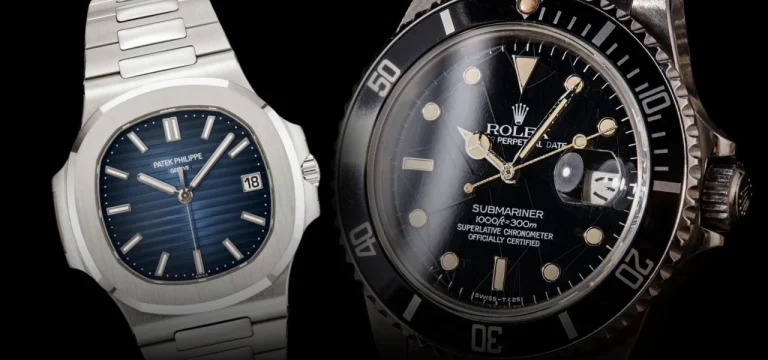
Rolex began using 904L in 1985. Early Rolex professional models, including the Sea-Dweller line, are commonly associated with the brand’s transition to 904L steel. That context matters. A professional dive watch is exposed to saltwater, sweat, caseback threads, bracelet links, and tight gaps where corrosion and pitting can become a concern.
904L is rich in chromium and molybdenum, which helps improve resistance to corrosion. Once polished, it also holds a distinctive shine, giving Oystersteel the clean, premium look many watch enthusiasts associate with modern Rolex steel watches.
Over time, Rolex gradually expanded the use of 904L across its steel watch collections and later branded it as Oystersteel. It is harder and costlier to machine than 316L, but Rolex has the scale, equipment, and finishing expertise to use 904L consistently.
Does Oystersteel Scratch Less in Real Life
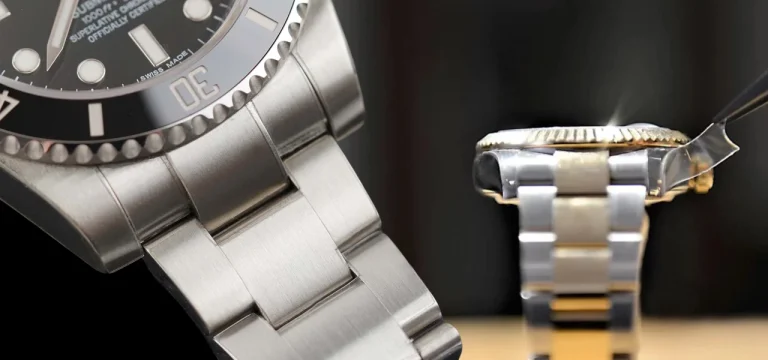
In real-world use, Oystersteel can still scratch. The marks are usually most visible on polished areas, where the surface reflects light more sharply, and even fine hairlines can stand out.
On Rolex watches, everyday scratches often appear on high-contact areas such as:
- Polished centre links
- Clasp covers
- Case sides
- Lugs
- Bezel edges
- Caseback edges
This does not mean the steel is weak. It means polished metal is honest about wear. A mirror-like finish looks beautiful when clean, but once a small hairline crosses the surface, it interrupts the reflection and becomes easier to notice under direct light.
Brushed surfaces behave differently. They can hide light marks better because the grain already has texture. However, scratches that run against the brushing, or deeper marks that cut through the grain, can still stand out.
In many cases, how you wear the watch matters more than whether it is made from 904L or 316L. Desk work, stacking jewellery, frequent travel, gym use, and exposure to sand, salt, or metal surfaces can all leave visible marks on the case, bracelet, or clasp.
So, does Oystersteel scratch less in daily life? Not in a way most owners will clearly notice. Rolex watches are durable and beautifully finished, but they are still meant to be worn, and they are not scratch-proof.
904L vs 316L for Daily Wear
For most owners, 316L stainless steel is more than adequate for daily wear. It handles office use, casual wear, commuting, and occasional outdoor exposure well, which is why it remains one of the most trusted types of stainless steel in the watch industry.
904L stainless steel becomes more appealing if your watch is regularly exposed to harsher conditions. If you live in a humid climate, spend time near the coast, swim often, dive, or sweat heavily, 904L offers extra peace of mind because of its stronger corrosion and pitting resistance.
That said, the upgrade from 316L to 904L is not dramatic if you are judging scratch resistance alone. Both steels can still pick up hairlines, clasp marks, and surface scratches through normal wear.
A simple way to decide:
- Choose 316L if you want proven durability, practical value, and reliable performance for everyday use.
- Choose 904L if you value stronger corrosion resistance, Rolex finishing, and a bright long-term polish. Do not choose 904L expecting the watch to stay scratch-free.
Whichever steel your watch is made from, rinse and dry it after saltwater exposure or heavy sweating. Regular cleaning helps protect the case, bracelet, and clasp from buildup that can affect the finish over time.
Is 904L the Best Steel for Scratch Resistance
Not necessarily. 904L is a premium stainless steel, but it is not the hardest stainless steel used in watchmaking. Its strength is corrosion resistance and polish, not unbeatable scratch resistance.
If scratch resistance is the main priority, the surface treatment can matter more than the base steel. Some brands use hardened cases, coatings, or treated alloys that can outperform untreated 904L in daily wear.
Examples include:
- Surface-hardened stainless steel
- Tegimented steel
- Ice-hardened steel
- DLC-coated steel
- PVD-coated steel
- Titanium with hardening treatment
This means a treated 316L case may resist visible scratches better than an untreated case made from 904L steel. The difference is how the surface is engineered to handle contact, abrasion, and everyday wear.
Still, there are trade-offs. Coatings and hardening treatments can improve scratch resistance, but they may be more difficult to refinish. Some coatings can also show damage if they are deeply chipped, especially when the material underneath becomes visible.
Another option to consider is adding a watch protection film. These ultra-thin, transparent layers are designed to shield the surface from everyday scratches without changing the look or feel of the watch. Watchskins offer tailored protection films that fit specific models, helping preserve the finish while keeping the original design intact.
Can Scratches Be Polished Out of 904L and 316L
Yes, scratches on both 904L and 316L stainless steel can often be refinished by a skilled professional. Polishing works by removing a very thin layer of metal to smooth the surface and restore the finish.
However, polishing should be done carefully. Repeated or aggressive polishing can:
- Soften the case edges
- Change the shape of the lugs
- Reduce collector appeal
This matters even more for Rolex watches, where buyers often value sharp, original case lines.
Brushed and polished surfaces also require different refinishing techniques. A polished clasp cover is not treated the same way as a brushed bracelet link, so the quality of the work matters.
Additionally, not every scratch needs polishing. Light hairlines are normal on a worn watch, while deep gouges may need professional assessment. Vintage or collectible watches should be handled especially carefully.
For long-term ownership, prevention is usually better than repeated polishing.
How to Reduce Scratches on Rolex Oystersteel and 316L Watches
You cannot prevent every scratch on a watch, but you can significantly reduce everyday wear from common habits. This applies whether your watch is made from 904L Oystersteel or 316L stainless steel.
Start with the areas that experience the most contact. Clasp scratches are especially common because the underside of your wrist often touches desks, counters, laptops, and metal surfaces throughout the day.
To keep your watch looking cleaner for longer:
- Avoid wearing your watch beside bracelets, bangles, or metal cuffs.
- Be careful around laptops, desks, counters, and metal tables.
- Store watches separately in a watch box, pouch, or roll.
- Rinse your watch after saltwater exposure, if the model is suitable for water contact.
- Wipe the case and bracelet with a soft microfiber cloth after wear.
- Avoid polishing cloths with abrasive compounds unless recommended by a professional.
- Remove your watch before heavy gym work, DIY tasks, or contact sports.
- Keep sand and grit away from the bracelet, clasp, and caseback edges.
Protective films can also help reduce everyday surface marks on high-contact areas. They are especially useful on polished centre links, clasp surfaces, case sides, and lugs, where fine marks tend to show quickly.
Quality matters here. A good watch protection film should have:
- Precision fit
- Clear finish
- No visible bulk
- No glue residue
- Proper application around curved surfaces
This helps protect the watch while keeping it visually close to its original appearance. That said, protection film does not make a watch indestructible. It helps reduce visible daily wear, but strong impacts, deep abrasions, and poor handling can still damage the watch.

Which Steel Should You Choose
The best choice depends on how you wear your watch and what you value most. Both 904L and 316L are proven stainless steels, but they suit slightly different priorities.
Choose 904L / Oystersteel if:
You want a Rolex or a watch with a brighter polished finish, you wear your watch in humid, coastal, or marine environments, value corrosion resistance and long-term finish quality, and understand that it can still scratch with daily use.
Choose 316L if:
You want a durable daily watch at a lower cost, do not need the added corrosion resistance of 904L, a widely used, proven stainless steel found across many respected watch brands, and you prioritise practical value over premium material positioning.
In short, 904L is the better choice for corrosion resistance and luxury finishing, while 316L is more than capable for most daily wear.
Final Word
904L is a premium stainless steel with clear advantages in corrosion resistance, pitting resistance, and polished finish, but it does not make a Rolex scratch-proof. For most owners, the real difference between 904L and 316L comes down to how the watch is worn, cleaned, protected, and maintained.
Key Takeaways
- 904L is not scratch-proof. Its biggest advantage over 316L is corrosion and pitting resistance, not dramatically better scratch resistance.
- Finish and wear habits matter most. Polished surfaces, desk contact, jewellery, sand, and daily use often affect visible scratches more than the steel grade.
- Protection beats repeated polishing. Light hairlines are normal, but careful storage, regular cleaning, and protection film can help preserve the watch’s original finish.
With Watchskins’ precision-applied watch protection film, you can shield high-contact areas while preserving the original finish, clarity, and feel of your luxury watch. Protect your watch before hairline scratches appear with a precision-fit protection specially designed for luxury watch models.