

Keeping your Rolex in pristine condition is essential to maintain its value and functionality. Over time, dirt and oils can build up, diminishing its appearance and potentially affecting its performance.
Cleaning your Rolex at home is simple with the right tools and techniques. By following expert-approved steps, you’ll prevent damage and preserve your watch’s value.
From securing the crown to using a soft-bristle brush and neutral soap, this guide walks you through each Rolex cleaning tips and step to ensure your valuable timepiece remains spotless, functional, and well-maintained for years to come.
Pre-Cleaning Checklist
Before cleaning your Rolex, it’s crucial to be prepared. Here’s a quick checklist to ensure your watch stays safe and spotless during the cleaning process:
Check the Watch’s Waterproofing
Worn-out seals (gaskets) around the case, crown, or crystal can let water in, causing costly internal damage. If your watch hasn’t been serviced recently, assume the seals may no longer be reliable.
Here’s what to do:
1. Verify the seals: If your watch hasn’t been serviced in the last 5-10 years, assume the seals might not be intact or not properly sealed. Avoid submerging the watch unless you’re confident the seals are in good condition.
2. Seek professional help: If you’re unsure about the waterproofing, take your Rolex to an authorized professional for a pressure test before cleaning.
3. For vintage Rolex models: Avoid exposing vintage watches (20+ years old) to water unless they’ve recently been pressure-tested and resealed.
Secure the Crown
When screwed down properly, it seals the case and prevents moisture from entering the movement. If left open, water can easily damage the delicate internal components, resulting in expensive repairs.
How to secure it:
1. Ensure the winding crown is fully screwed down before cleaning.
2. Rotate it clockwise until it won’t turn further. For models like the Submariner, Daytona, or Datejust, this is a straightforward step.
3. If you’re cleaning a Rolex Cellini collection or vintage model without a screw-down crown, avoid water-based cleaning entirely, as these watches lack waterproofing.
Gather the Right Cleaning Supplies
Here’s what you’ll need:
1. Neutral pH Soap
Harsh soaps with acidic or alkaline chemicals can corrode metal and damage gaskets. Opt for a gentle, ammonia-free soap like dishwashing liquid. Avoid toothpaste or baking soda, as they are abrasive.
2. Soft-Bristle Toothbrush or Watch Brush
The soft bristles are gentle enough to avoid scratching the case or bracelet while effectively removing dirt. Do NOT use hard-bristle brushes, as they can leave scratches.
3. Microfiber Cloth
Perfect for drying and polishing without leaving lint or causing scratches. Avoid regular towels or tissues, which can be too rough for Rolex’s polished surfaces.
4. Lukewarm Water (No Hot Water)
Water above 30°C (86°F) can damage gaskets and metal finishes. Lukewarm water is ideal for loosening dirt without risking damage.
After gathering the right materials, be sure to watch out for the following:
- Ammonia-based cleaners: They can corrode metals and harm the delicate finish.
- Abrasive materials: These include scouring pads or gritty cloths that can scratch the case and bracelet.
- Ultrasonic cleaners: While they can be used for metal bracelets, never place the actual watch in one, as they may compromise seals or damage the movement.
Step-by-Step Guide: How to Clean a Rolex
Here’s how to clean your Rolex safely and effectively:
Step 1: Secure the Crown
Before cleaning, make sure the crown is in the screwed down position. This seals the watch and protects it from water and dirt.
Modern Rolex watches with water-resistant Oyster cases (like the Submariner or Daytona) are safe for water exposure when the crown is secure. For vintage models or Cellini watches, avoid water entirely unless a professional has recently resealed the watch during routine servicing.
Skipping this step can lead to costly water damage.
Step 2: Rinse with Lukewarm Water
Gently rinse your Rolex under warm soapy water to wash off loose dirt and dust. Don’t soak the watch, even if it’s water-resistant—prolonged exposure can still cause issues if seals are worn.
For diver’s watches, like the Submariner or Sea-Dweller, rotate the bezel while rinsing to flush out trapped dirt.
If your watch was exposed to saltwater or chlorine, rinse it immediately with fresh water to prevent corrosion.
Step 3: Clean with a Soft Brush and Soap Solution
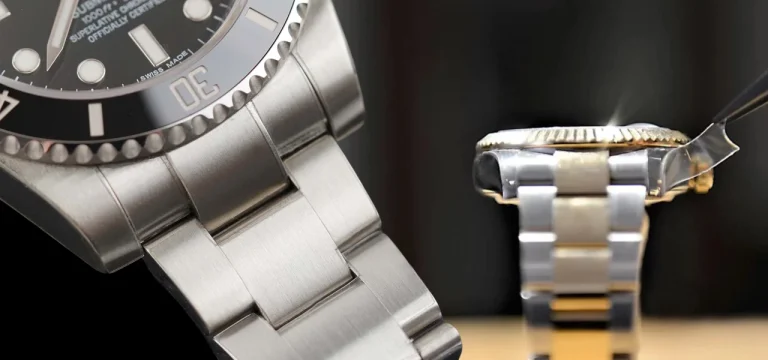
Mix a small drop of neutral pH soap with lukewarm water. Use a soft-bristle brush, like an ultra-soft toothbrush, to gently clean the bracelet, clasp, bezel, and end links. Pay extra attention to areas where dirt collects, like between the links, grooves, and inner surfaces. Be gentle around the crystal and case to avoid scratches.
For watches with rotating bezels, such as the Yacht-Master II, rotate the bezel while cleaning to remove trapped grime. If your watch has a leather strap, skip the soap. Instead, wipe it with a damp cloth and condition it lightly with a leather care product.
Step 4: Rinse Thoroughly
Rinse the watch under lukewarm water to remove any soap residue. Pay attention to small spaces, like between bracelet links, end links, or around the bezel, where soap might hide.
Rotate the bezel again if your model has one to ensure it’s fully rinsed. For vintage or non-waterproof models, skip this step and use a damp cloth instead.
Rinsing your Rolex after exposure to salt water is crucial to prevent damage to the watch’s movement and maintain its performance.
Step 5: Dry the Watch Properly
Pat the watch dry with a microfiber cloth. Avoid regular towels or tissues—they can leave fibers or cause scratches. Make sure to dry small areas, like the clasp, bracelet links, end links, and crown, to prevent moisture from staying in crevices.
Step 6: Polish for the Final Touch
Use a clean microfiber cloth to gently buff the watch and restore its shine using a circular motion. Avoid over-polishing, especially for vintage models, as this can wear down the metal.
For minor scratches, use a Rolex-approved polishing cloth, but don’t overdo it. A light buff will keep your watch looking great without risking damage. Regular cleaning paired with routine servicing will ensure your Rolex stays in pristine condition.
Special Considerations for Different Rolex Types
Different materials and designs demand specific methods to keep them in top condition.
Cleaning Metal Bracelets

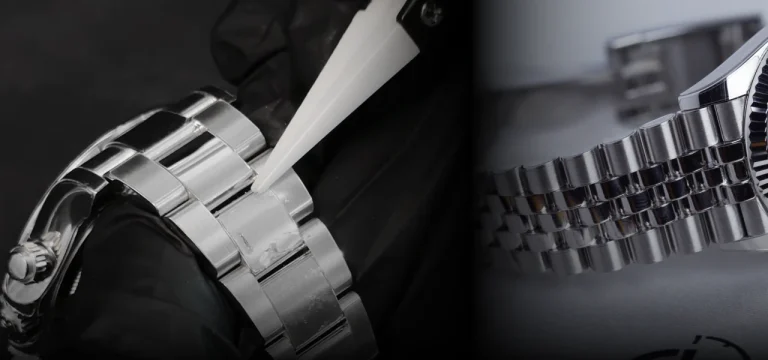
Dirt and grime easily build up in the tiny spaces between bracelet links and clasps, which can cause wear and stretching over time.
How to clean:
1. Remove the Bracelet (Optional): Use a spring bar tool to detach the bracelet from the case for easier access to hard-to-reach areas.
2. Soak in Soapy Water: Place the bracelet in a bowl of warm water mixed with a small amount of mild, ammonia-free soap. Let it soak in a mild soap for a few minutes to loosen dirt and oils.
3. Scrub Gently: Use a soft-bristled toothbrush to clean between the links and clasp. Apply gentle pressure to avoid scratching the polished surfaces.
4. Rinse Thoroughly: Run the bracelet under lukewarm water to remove soap residue. Rotate the bracelet to ensure water reaches every part.
5. Dry Properly: Pat the bracelet dry with a clean microfiber cloth. Ensure no moisture remains in the links or clasp to prevent rust.
Compatible Models: Works for all modern Rolex watches offering with stainless steel, Oystersteel, Rolesor, or gold bracelets (e.g., Submariner, Datejust, Daytona, and Oyster Perpetual models).
Cleaning Leather Straps

Leather straps are more delicate than metal bracelets and are highly sensitive to water, which can cause discoloration, stiffness, or cracking.
Steps to Clean:
1. Wipe Gently: Use a damp microfiber cloth to wipe the strap. Avoid soaking the leather.
2. Spot Clean Stains: Apply a small amount of neutral leather cleaner to a cloth and rub gently on stained areas.
3. Condition the Leather: Use a leather conditioner sparingly to prevent the strap from drying out or cracking.
4. Dry Naturally: Let the strap air-dry at room temperature. Avoid direct sunlight or heaters.
Leather straps need gentle care to keep them in good shape. Don’t soak them in water—this can ruin the leather by causing cracks or discoloration. Also, skip harsh cleaners or rough scrubbing, as they can damage the surface. These straps are often used on formal models like the Rolex Cellini watches , so handle them with extra care.
Vintage Rolex Watches
Many older vintage models, especially those over 20 years old, often lack modern water-resistant seals, making them more vulnerable to damage from water and improper cleaning.
Steps for Safe Cleaning:
1. Avoid Water Contact: Do not submerge or rinse vintage watches. Clean only the exterior with a slightly damp or dry microfiber cloth.
2. Handle Acrylic Crystals Carefully: Many vintage Rolexes have acrylic crystals, which are softer than sapphire. Light scratches can be buffed out using a polishing compound like PolyWatch.
3. Inspect Seals and Gaskets: Gaskets in older watches may have degraded, leading to poor water resistance. Have them replaced during servicing.
4. Leave Internal Cleaning to Professionals: Do not attempt DIY cleaning for internal components or under the bezel. Take the watch to a professional watchmaker for a thorough cleaning.
How Often Should You Clean Your Rolex?
The frequency of cleaning your Rolex depends on how often you wear it:
- Daily Wearers: Clean your watch every 1-2 months to remove dirt, oils, and sweat buildup.
- Occasional Wearers: For watches worn less frequently, cleaning every 3-4 months is sufficient.
- Professional Servicing: Schedule a professional service every 1-2 years to ensure a thorough deep clean and check for any wear or damage.
Rolex advises bringing your watch to an Official Rolex Retailer or Service Centre for professional servicing approximately every 10 years.
Storing Your Rolex After Cleaning
This is just as important as the cleaning itself. Always keep your watch in a cool, dry place to avoid moisture and rust. Direct sunlight and humidity should be avoided as they can damage the materials and shorten the lifespan of your watch.
For added protection, store your Rolex in its original box or a high-quality watch case to keep it safe from dust and scratches.
You can also use a protective film to shield your Rolex from scratches and minor scuffs during daily wear or handling. These films are designed to maintain the watch’s original look while adding an invisible layer of protection.
For the best results, consider having the protective film professionally applied to ensure a precise fit and avoid bubbles or misalignment.
Conclusion
Keeping your Rolex clean ensures it stays beautiful, functional, and valuable. With the right tools, proper techniques, and regular cleaning, your watch will last for years to come—shining as brilliantly as the day you got it.
- Use neutral pH soap, a soft-bristle toothbrush, a microfiber cloth, and lukewarm water.
- Avoid harsh chemicals, abrasive brushes, and submerging vintage or non-waterproof watches.
- Clean daily wearers every 1-2 months, occasional wearers every 3-4 months, and get professional servicing every 1-2 years.
Looking for the best way to protect your Rolex from scratches and daily wear? At Watchskins, we specialize in keeping your luxury watches in top condition. With our Protective Films, your Rolex will stay scratch-free and maintain its pristine look for years to come. Contact us today to book your appointment!