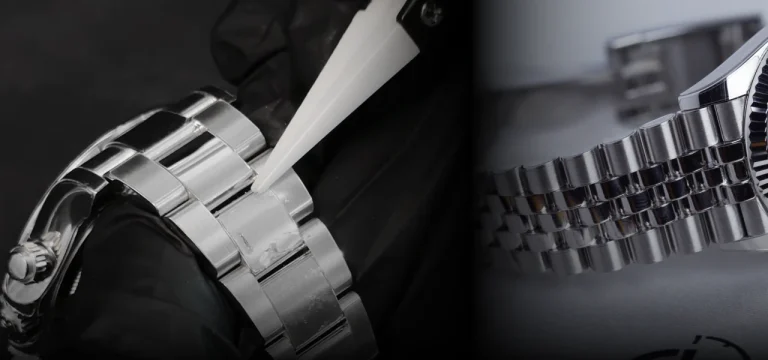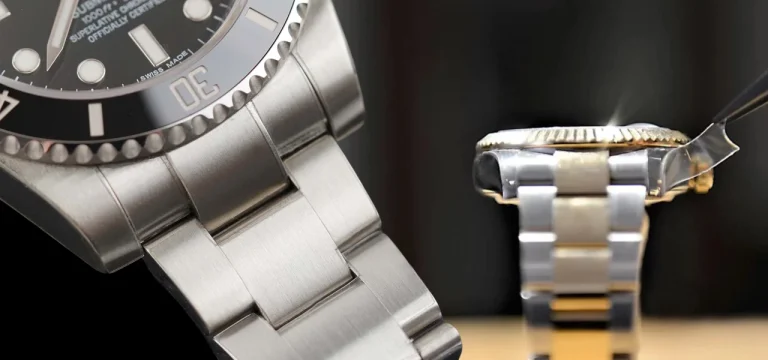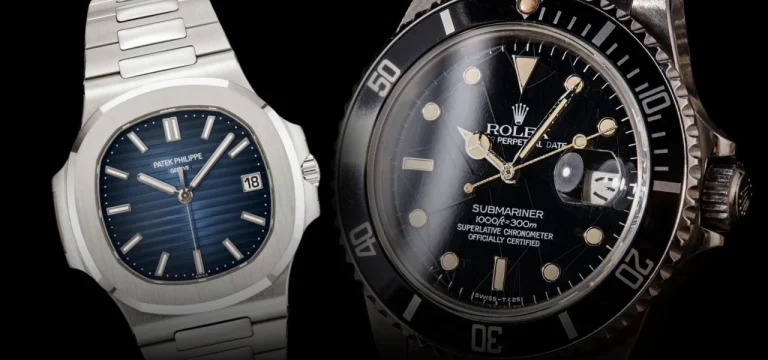


Scratch a mineral or sapphire crystal and the damage is effectively permanent in everyday terms. Acrylic is the exception, since fine scratches can often be polished out. And yet most people don’t think about which material sits over their dial until it’s already scuffed.
Not all crystals age the same way. Acrylic takes a hit well but scratches if you look at it wrong. Mineral glass splits the difference between the two. Sapphire barely scratches at all, but drop it just right and it can crack or chip instead of scuffing.
So which one actually benefits most from added protection? That’s really the question worth answering, since “hardest” doesn’t always mean “safest.” This guide breaks down each crystal type and where a protective film actually earns its place.
What Is a Watch Crystal and What Does It Protect
The clear cover above a watch’s dial is called the crystal, though the name is somewhat misleading. Despite the name, most aren’t slices of natural gemstone. They are synthetic materials such as acrylic plastic, tempered glass, or lab-grown sapphire, each bringing a different balance of durability and clarity to the piece.

Its function goes beyond simply shielding the dial and hands from contact. A well-fitted crystal contributes directly to a watch’s water resistance and helps maintain the legibility that makes a timepiece genuinely usable, not just decorative.
Many watches also feature a second crystal on the caseback, offering a view of the movement at work. But performance here isn’t determined by material alone. Thickness, curvature, coatings, and how precisely the crystal is fitted into the case all shape how it holds up over time.
Watch Crystal Types at a Glance
Every watch crystal represents a trade-off among three properties: its resistance to scratching, its ability to absorb impact, and its ease of repair in the event of damage. No single material is best at all three, which is why manufacturers choose differently depending on the watch’s positioning and intended use.
| Crystal type | Scratch resistance | Impact resistance | Repairability | Common use |
| Acrylic | Low | High | Often polishable | Vintage and heritage-style watches |
| Mineral glass | Moderate | Moderate | Difficult to polish | Entry-level and everyday luxury watches |
| Sapphire | Very high | Moderate | Specialist repair or replacement | Premium and luxury watches |
| Sapphire-coated mineral | Moderate to high | Moderate | Limited | Mid-range and entry-level luxury watches |
A harder crystal like sapphire resists everyday abrasion exceptionally well, but that same rigidity can make it more prone to chipping or cracking under a sharp impact. Softer materials like acrylic trade scratch resistance for flexibility, absorbing shocks that would fracture a harder surface. The right choice depends less on which crystal is “best” and more on how the watch is actually worn day to day, a distinction we’ll unpack for each type below.
Acrylic Crystal: Soft but Impact-Resistant
Acrylic crystal is made from polymethyl methacrylate, or PMMA. You may also see it called Plexiglass, Perspex, or Hesalite, although Hesalite is most closely associated with Omega, while acrylic is the broader material category.
Acrylic is lightweight, flexible, and less likely to shatter into sharp fragments after impact. It can also be shaped into domed, box-style, or vintage-inspired profiles, which is why it remains common on vintage watches, military-style models, and selected Omega Speedmaster Moonwatch references. Fine surface scratches can often be polished, and replacement is usually more affordable than with sapphire.
Its main drawbacks include:
- It scratches more easily than mineral glass or sapphire.
- UV exposure and ageing can cause clouding, haze, or yellowing.
- Deep marks may distort the view of the dial.
- Regular cosmetic maintenance may be needed.
Acrylic has the greatest need for protection against everyday surface scratches. However, its flexibility and strong impact tolerance still make it a practical choice for watches designed around heritage, safety, and ease of repair.
Mineral Glass: More Scratch-Resistant Than Acrylic
Mineral glass is a silica-based material widely used in affordable and mid-range watches. Depending on the manufacturer, mineral glass may be chemically strengthened through ion exchange or heat-tempered for added durability. These treatments create surface compression, helping the crystal better resist everyday impacts and reducing the chance of small surface cracks spreading during normal wear.
Its main advantages include:
- More scratch-resistant than acrylic
- Generally more affordable than sapphire
- Clear visibility of the dial
- A practical balance of cost and everyday durability
However, mineral glass still has limitations:
- Harder particles and abrasive debris can scratch it.
- Strong impacts may cause chips or cracks.
- Scratches are difficult to polish without creating distortion.
- Replacement is often more practical than refinishing.
Seiko Hardlex is one well-known example of treated mineral glass, but Hardlex is not a generic term for every mineral crystal.
Mineral glass may benefit most from preventive protection from a cost-and-repair perspective. It scratches more easily than sapphire, yet unlike acrylic, it cannot usually be polished back to a clean finish with the same ease.
Sapphire Crystal: Highly Scratch-Resistant
Sapphire crystal is made from laboratory-grown aluminum oxide (Al₂O₃) , the same mineral species as natural corundum. During production, manufacturers grow large synthetic sapphire boules using methods such as Kyropoulos or Czochralski growth, then cut and polish them into individual crystals. Sapphire rates 9 on the Mohs hardness scale, making it one of the hardest transparent materials used in consumer products, but Mohs hardness reflects scratch resistance rather than impact resistance or toughness.
Its main advantages include:
- Resists most scratches from ordinary metals and everyday contact
- Maintains clarity for long periods
- Commonly used in luxury, premium, and high-performance watches
- Less likely to become cloudy or yellow than acrylic
However, sapphire is not damage-proof:
- Diamond, corundum, and similarly hard abrasive particles can still scratch it.
- The edges may chip after a direct knock.
- Severe or concentrated impact can cause cracks or shattering.
- Polishing normally requires specialist equipment.
- Replacement can be costly, especially for shaped, branded, or reference-specific crystals.
Some sapphire crystals also use an internal or external anti-reflective coating. External coatings may show scratches even when the sapphire underneath remains intact, while blue or purple reflections often come from the coating rather than the crystal itself.
Sapphire needs less protection from ordinary scratching than acrylic or mineral glass. Even so, added protection may help preserve exposed coatings and reduce contact with abrasive debris.
Sapphire-Coated Mineral Crystal Explained
A sapphire-coated mineral crystal starts with a mineral glass base and adds a thin surface layer of sapphire or a sapphire-like coating, typically applied through a vapor deposition process. The result sits between the two materials in performance: noticeably better resistance to fine scratches than standard mineral glass, at a fraction of the cost of a solid sapphire crystal.
It’s a common choice on mid-range watches where brands want to offer a scratch-resistant feel without the manufacturing expense that solid sapphire demands.
The distinction matters, though, because the coating is only a few microns thick, and that thinness is the source of its main limitations:
- The mineral base can still chip or crack.
- Deep damage may penetrate the coating.
- The surface layer can wear or become visibly marked.
- Repair options are often limited.
Because the coated surface can be difficult to restore once damaged, preventive protection may be especially worthwhile for this type of watch crystal.
Other Factors That Affect Crystal Durability
Material sets the baseline, but it doesn’t tell the whole story. Two watches with the same sapphire crystal can age very differently depending on how the crystal is shaped, mounted, and worn.
Crystal Shape
A flat crystal sits recessed within the case, so the bezel takes the brunt of side-on contact before the crystal ever does. Domed, box-shaped, and top-hat crystals rise above the bezel line for aesthetic or vintage appeal, but that same profile means they make first contact against door frames, tables, and other watches far more often.
Bezel Protection
A raised or reinforced bezel acts as a buffer, absorbing glancing blows that would otherwise land directly on the crystal’s edge, which is typically its most vulnerable point. Flush-mounted or protruding bezel designs offer less of that buffer, leaving more of the crystal’s surface and edge exposed to direct contact.
Coatings and construction
Anti-reflective coatings improve legibility by cutting glare, but they sit on the outermost surface, meaning fine scratches or cloudy patches can appear there well before the sapphire underneath shows any real wear. This can make a scratch-resistant crystal look damaged even when the structural material is untouched. Beyond coatings, thickness, curvature, edge geometry, and how the crystal is seated in the case all influence how impact energy is absorbed or transferred, which is part of why two watches with identical crystal materials can hold up differently in practice.
Wearing Habits
Hours at a desk create low risk beyond incidental knocks against furniture, while outdoor activity, manual work, or travel introduce more frequent contact with rough or hard surfaces. Stacking watches or bracelets on the same wrist adds a source of scratching that’s easy to overlook.
Water resistance, meanwhile, isn’t a fixed property of the crystal or case alone; it depends on gaskets and seals remaining properly seated and intact, which requires periodic servicing rather than a one-time guarantee.
How to Identify Your Watch’s Crystal Type
- Check the official specifications. Look up the model reference on the manufacturer’s website, warranty card, manual, or product documentation.
- Ask a professional. An authorised dealer, experienced watchmaker, or service centre can help identify the crystal material.
- Treat home tests cautiously. Appearance, sound, temperature, reflections, and water-drop behaviour are not fully reliable. Sapphire-coated mineral glass can be especially difficult to distinguish from solid sapphire.
Avoid scratch tests with knives, keys, sandpaper, or other abrasives, as they may permanently damage your watch crystal. For a valuable watch, professional testing is the safest option.
When to Repair or Replace a Watch Crystal
A watch crystal may need attention when fine scratches affect its appearance, deep marks reduce legibility, or chips and cracks appear around the edge. Clouding, yellowing, moisture beneath the crystal, a loose fit, or visible damage to an anti-reflective coating also warrant inspection.
Fine acrylic scratches can often be polished professionally. Mineral glass is usually replaced rather than refinished, while sapphire polishing is specialised and may not be cost-effective.
A cracked or poorly seated crystal can compromise water resistance. Any replacement should use the correct dimensions, seals, and pressure testing where relevant.
For vintage watches, owners should also consider whether the original crystal profile or related components affect authenticity and value.
Which Watch Crystal Needs Protection the Most
There is no single best option for every wearer, because each watch crystal type handles damage differently.
Acrylic shows scratches the fastest. Its softer surface marks easily during daily wear, so added protection can reduce superficial damage and limit the need for repeated polishing.
Mineral glass may benefit most overall. It is more scratch-resistant than acrylic but still marks more easily than sapphire. Since mineral glass is also difficult to polish successfully, preventive protection can offer the greatest practical value.
Sapphire needs the least scratch protection, but it is not immune to damage. A protective layer may help preserve an external anti-reflective coating and reduce contact with abrasive particles. However, it will not prevent cracking or chipping from a severe impact.
Overall, mineral glass arguably gains the most from surface protection, while acrylic shows wear most quickly. Sapphire remains the most resistant to everyday scratches, but damage can still be costly.
Can Protective Film Be Applied to a Watch Crystal

Several protection options can be used on a watch crystal, although suitability depends on its shape, curvature, edge profile, coatings, and watch reference.
- TPU protection film is thin, flexible, and well-suited to curved or detailed surfaces. Premium films may also have self-healing properties that help light marks fade, although the film will eventually need replacement.
- Tempered glass protectors offer strong surface hardness on flat crystals. However, they can add visible thickness and may not fit domed or unusually shaped designs.
- Ceramic and nano coatings create a hydrophobic surface that can reduce minor marks and repel oils. Unlike film, they do not provide a physical sacrificial layer or meaningful impact absorption.
Whichever option you choose, protection may reduce superficial scratches and scuffs, but it cannot make the crystal shatterproof.
FAQs
1. Can Sapphire Crystal Crack?
Yes, a sapphire crystal can crack if it is hit hard enough. Although sapphire is known for excellent scratch resistance, it is less flexible than acrylic and may chip or crack from a concentrated impact, particularly at the edges.
2. Is Hardlex Better Than Sapphire?
Neither crystal is always better. Hardlex is usually preferred for better impact resistance, while sapphire is the better choice for superior scratch resistance. The right option depends on your daily use, wrist environment, and durability priorities.
3. Can Sapphire Crystal Be Polished?
Yes, sapphire crystal can be polished, but only with professional-grade diamond abrasives and specialized equipment. In many cases, replacing the crystal is more practical than refinishing it, especially if the scratch or damage is deep.
Conclusion
No crystal is completely damage-proof. Acrylic scratches easily but handles impacts well. Mineral glass sits in the middle. Sapphire barely scratches but can chip or crack from hard knocks. Even the hardest crystal can fail, so knowing your watch’s specific weaknesses matters more than chasing the “best” material on paper.
Key takeaways
- Different types of watch crystals offer different levels of scratch resistance, impact tolerance, and repairability.
- Acrylic develops surface scratches most quickly, while mineral glass is more difficult to restore once marked.
- A sapphire crystal resists everyday scratches well, but it can still chip, crack, or show damage to its coating.
Different watch crystals respond differently to scratches and impacts, so understanding those differences helps you choose the right level of protection. If you’re looking to reduce everyday cosmetic wear, Watchskins’ self-healing watch protection film uses USA laser-cutting technology to create a model-specific fit, helping protect your watch from everyday surface scratches while preserving its original appearance.