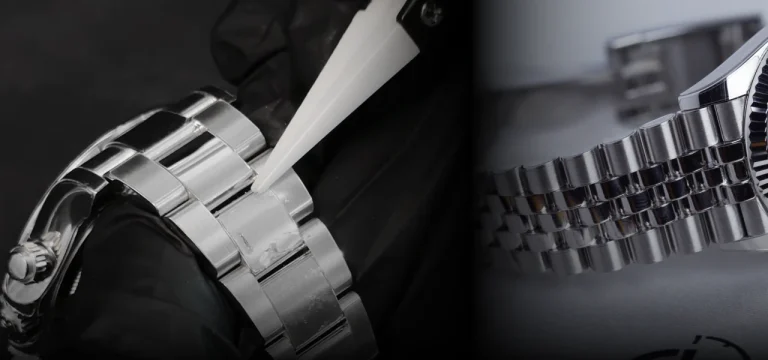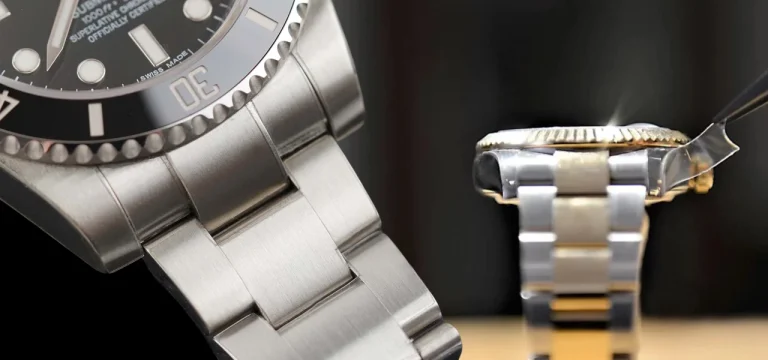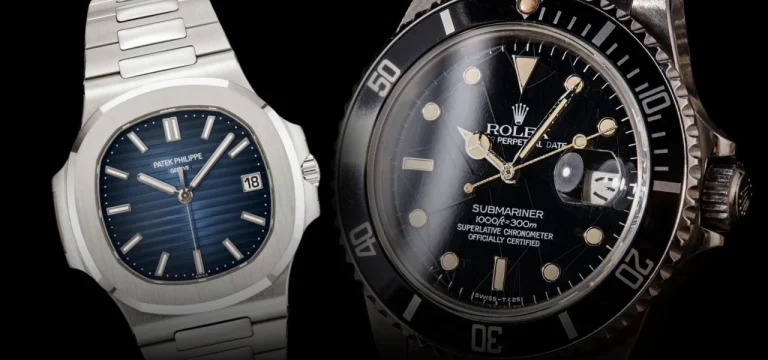


The crystal covering your watch face determines how well your watch resists everyday wear. It influences scratch resistance, impact behaviour, optical clarity, maintenance, and how long the watch keeps its original appearance.
Sapphire crystal generally provides better scratch resistance than mineral glass, while mineral glass offers a lower replacement cost and different impact characteristics. Whichever material your watch uses, neither is immune to chips, damaged anti-reflective coatings, or cosmetic wear. Some owners choose to apply a watch protection film to help preserve the crystal without changing the appearance of the watch.
This guide compares sapphire crystal and mineral glass across durability, optical performance, maintenance, ownership costs, and protection options to help you choose the right crystal.
Sapphire Crystal vs Mineral Glass: The Quick Answer
For most buyers, sapphire crystal is the better choice. It resists scratches far more effectively than mineral glass, helps keep the dial looking clear for years, and holds up well in daily-wear luxury watches and scratch-prone environments.

Mineral glass still earns its place, especially in entry-level and mid-range watches, where replacement cost and how it handles impacts matter more than long-term shine.
But hardness isn’t the only factor. Sapphire and mineral glass behave differently under pressure, and knowing which one fits your lifestyle takes a closer look at both.
Sapphire vs Mineral Glass: Key Differences
The table below highlights the main differences between sapphire crystal and mineral glass before examining each factor in more detail.
| Feature | Sapphire Crystal | Mineral Glass |
| Material | Synthetic aluminium oxide | Silica-based glass |
| Mohs hardness | About 9 | Usually around 5 to 6 |
| Scratch resistance | Excellent | Moderate |
| Impact behaviour | Hard but relatively brittle | Softer and may behave differently under impact |
| Clarity | Excellent, especially with an AR coating | Clear, with finish and coating affecting reflections |
| Long-term appearance | Resists scratches and haze | More likely to develop visible wear |
| Polishing | Technically possible but rarely practical | Occasionally possible, but replacement is usually easier |
| Typical repair | Replacement | Replacement |
| Replacement cost | Usually higher | Usually lower |
| Common use | Premium and luxury watches | Entry-level and mid-range watches |
| Best for | Lasting clarity and scratch resistance | Affordability and lower ownership costs |
These are general differences rather than guarantees. The crystal’s thickness, shape, anti-reflective coating, bezel protection, mounting system, and overall case construction can all affect how it performs in everyday wear.
What Is Sapphire Crystal
Sapphire crystal is a synthetic watch crystal made primarily from aluminium oxide, not a naturally mined gemstone. Manufacturers grow the material under controlled conditions using methods such as the Verneuil or Czochralski process, then cut, grind, and polish it into the shape required for the watch.
A sapphire crystal ranks around 9 on the Mohs hardness scale, making it harder than steel, ordinary glass, and quartz. This gives it excellent scratch resistance, but the demanding production and finishing process also make it more expensive than mineral glass.
Diamond is not the only material capable of scratching sapphire. Silicon carbide, corundum, other sapphire surfaces, and similarly hard abrasives can also damage it. By contrast, most everyday items such as keys, coins, and steel tools usually will not scratch sapphire.
Some visible marks are not true scratches in the crystal. They may be transferred material, residue, or damage to an external anti-reflective coating rather than the sapphire itself.
What Is Mineral Glass
Mineral glass is a silica-based watch crystal commonly used in affordable and mid-range watches. It is usually strengthened through heat tempering, chemical treatment, or a combination of both to improve its resistance to scratches and impact.
On the Mohs hardness scale, standard mineral glass generally falls around 5 to 6. This makes it harder and more scratch-resistant than acrylic, but still substantially softer than sapphire crystal. Hardened versions may perform somewhat better, although their exact properties vary by manufacturer.
The term mineral glass refers to a broad category rather than one exact formulation. Common types include:
- Standard tempered mineral glass
- Chemically hardened mineral glass
- Proprietary branded formulations
- Seiko Hardlex
- Sapphire-coated mineral glass
Mineral glass remains popular because it offers a practical balance of clarity, impact performance, availability, and manufacturing cost. It will usually show wear sooner than sapphire, but it also helps keep the watch and future crystal replacement more affordable.
How Sapphire and Mineral Glass Are Made
Sapphire crystal starts as aluminum oxide, melted or crystallized under tightly controlled conditions until it forms a dense, ultra-hard material. From there, it’s sliced, shaped, and polished using tools nearly as hard as the sapphire itself. Curved profiles, domes, and beveled edges demand extra time and precision, which is a major reason sapphire crystals cost more.
Mineral glass, by contrast, is silica-based glass shaped and then strengthened through thermal tempering, ion-exchange treatment, or a combination of both. Because it’s far easier to cut and finish than sapphire, production stays faster and cheaper.
This gap in manufacturing complexity is exactly why sapphire crystals carry a higher price tag, while mineral glass allows brands to keep watches and replacement crystals more affordable.
Scratch Resistance: Which Crystal Scratches More Easily
Mineral glass scratches more easily than sapphire crystal. Daily contact with grit, hard surfaces, rough storage, and repeated wear can leave fine hairlines that gradually create visible haze across the crystal.

Sapphire offers much stronger scratch resistance. At around 9 on the Mohs hardness scale, it is harder than steel, ordinary glass, and quartz, which ranks about 7. Most everyday items like keys and coins usually will not scratch sapphire.
Quartz sand will usually not scratch sapphire, but it can still be abrasive. Sand may contain harder contaminants or mark an exposed anti-reflective coating.
Not every line on a sapphire crystal is a true scratch. It may be:
- Transferred metal or ceramic residue
- Damage to an external AR coating
- Dried dirt or mineral deposits
- A genuine mark caused by silicon carbide or another very hard abrasive
How quickly either crystal shows wear depends on your occupation, storage habits, environment, crystal exposure, and how often you wear the watch.
Even though sapphire crystal is highly scratch-resistant, many owners still choose to protect it because cosmetic wear can affect the watch’s appearance. Anti-reflective coatings, rough contact, and accidental impacts may still leave visible marks, and a protective film can help absorb some of that everyday wear first.
Hardness vs Toughness: Why Harder Does Not Mean Unbreakable
Hardness measures how well a material resists scratches and indentation. Toughness describes its ability to absorb force without cracking, chipping, or fracturing.
Sapphire crystal is much harder and more scratch-resistant than mineral glass, but that does not make it unbreakable. A sharp impact, especially near an exposed edge, can still chip or crack the crystal.
Mineral glass is softer and may tolerate certain knocks better, yet it can also crack or shatter under enough force.
The watch’s construction also influences durability:
- Shape: Flat, single-domed, double-domed, and box-shaped crystals distribute force differently.
- Exposure: Raised or bevelled edges are more vulnerable than a crystal recessed beneath the bezel.
- Thickness: A thicker crystal may withstand force better than a thinner one.
- Bezel protection: A bezel extending above the crystal can reduce direct contact and impact.
- Support: Gasket fit, edge support, and case design affect how force is absorbed.
For this reason, the type of material alone cannot predict whether a watch crystal will survive every drop or collision. A thick, well-protected sapphire crystal may outperform a thinner mineral one, while poor case design can weaken either material.
Optical Clarity, Glare, and Dial Legibility
Both sapphire crystal and mineral glass can provide excellent transparency, so neither material should automatically be described as clearer in every watch.
Untreated sapphire reflects more light than mineral glass and may create noticeable glare, especially under bright lighting. Mineral glass can appear less reflective when both materials are uncoated. However, sapphire often looks clearer in premium watches because manufacturers pair it with a high-quality anti-reflective coating.
Crystal shape also affects how easily you can read the dial. Domed or curved watch crystals may introduce distortion at certain angles, while poor polishing can reduce visual sharpness.
Mineral glass may lose clarity over time as fine scratches and surface haze accumulate. Sapphire usually preserves a cleaner appearance for longer, but its real-world legibility still depends on the AR coating, curvature, finish, and overall crystal design.
Cost and Replacement
Mineral glass usually costs less to replace, which helps keep entry-level and mid-range watches affordable. Sapphire may cost more upfront, but its stronger scratch resistance can reduce the need for cosmetic replacement over time.
A damaged sapphire crystal can still be expensive to replace, particularly when it has a domed shape, proprietary profile, anti-reflective coating, or Cyclops magnifier.
Replacement costs also depend on:
- Brand and watch reference
- Crystal size and shape
- Availability of genuine parts
- Gasket replacement
- Pressure-testing requirements
For buyers comparing watch crystal options, total ownership cost is often more important than the upfront price alone. Mineral glass is usually more affordable initially, while sapphire crystal may help a watch maintain its appearance longer but can come with higher replacement costs if it chips or cracks. That is why watch protection film is becoming a practical choice for many owners: it offers a lower-cost way to help protect the crystal from everyday cosmetic wear and may reduce future repair expenses.
Can You Actually Polish Out a Scratch
Technically, yes, sapphire can be polished using diamond abrasives, the only material hard enough to work on it. But in practice, it’s rarely worth it. The process is slow, uneven results are common, and there’s a real risk of distorting the crystal’s shape or damaging an anti-reflective coating in the process. More often than not, it ends up costing more than simply replacing the crystal, which is why most scratches, chips, or cracks on sapphire lead straight to a swap rather than a repair.
Mineral glass is a bit more forgiving. Light surface marks can sometimes be buffed out by a professional, though the results vary depending on the depth and pattern of the scratch. Deeper damage usually can’t be corrected without risking clarity or leaving the surface slightly warped, so replacement often ends up being the simpler, more reliable fix.
Whatever you do, avoid DIY fixes like toothpaste, sandpaper, or household polishing compounds. These can strip protective coatings or leave the surface uneven, sometimes making the damage worse than before. If you’re ever unsure whether a mark is a scratch, a coating issue, or just surface residue, it’s worth having a watchmaker take a look before attempting anything yourself.
How to Care for Sapphire and Mineral Watch Crystals
Good habits go a long way toward keeping either material looking its best for years.
- Rinse away sand, dust, or grit before wiping, dry particles are what cause most surface scratches.
- Wipe with a clean, soft microfiber cloth rather than anything textured or reused from other cleaning tasks.
- Clean with mild soap and lukewarm water, but only if you’re confident the watch’s water resistance is still intact.
- Skip scouring pads, abrasive cleaners, and polishing powders, even ones marketed as gentle.
- Store watches separately, ideally in individual slots or pouches, so crystals and metal components don’t rub against each other.
- Never set the watch down crystal-first on a hard surface, even for a moment.
- Check for any chips or cracks as soon as you notice them, small damage tends to spread if it’s ignored.
- Skip the DIY hardness or scratch tests you might see online, they can cause the exact damage you’re trying to rule out.
- When a mark looks unfamiliar or you’re not sure what caused it, have a professional take a look before deciding on a fix.
Because the two materials fail differently, they also call for slightly different attention.
Mineral glass benefits most from scratch prevention and keeping an eye out for early haze, since that’s usually where damage starts. Sapphire owners can worry less about everyday scratches and more about sharp impacts, and when a mark does appear, it’s worth checking whether it’s actually in the crystal or just affecting an external anti-reflective coating.
Does a Watch Crystal Need Protective Film
Yes, watch protection film provides an additional sacrificial layer that helps reduce cosmetic wear on both sapphire crystal and mineral glass. While it cannot prevent every crack or severe impact, it helps preserve the original finish and delays visible signs of everyday use.
For both mineral glass and sapphire crystal, it can:
- Reduce hairline scratches and cosmetic marks
- Help prevent gradual haze or surface wear
- Protect exposed anti-reflective coatings
- Preserve clarity and the original surface
- Help maintain overall condition and appearance
However, protective film does not make the crystal shatterproof, prevent every chip or crack, or repair existing damage. It also does not replace professional servicing, gasket checks, or pressure testing.
For owners who want added everyday protection without changing the look of the watch, Watchskins offers precision-applied protective film designed to preserve the crystal and surrounding surfaces while keeping the original finish visible.
Which Crystal Should You Choose: Sapphire or Mineral Glass
There’s no single right answer here, it comes down to how often you wear the watch, the conditions it’s exposed to, and how much cosmetic wear you’re willing to live with over time.
Sapphire crystal makes sense if:
- You want the strongest possible resistance to everyday scratches
- You wear the watch daily, or close to it
- You’d rather pay more upfront than watch the crystal dull over time
- The watch itself is a premium or luxury piece worth protecting
- You’re comfortable with a higher replacement cost if damage does occur
- Your daily environment involves more abrasion (keys, countertops, tools) than hard impacts
Mineral glass makes sense if:
- You’re working with a tighter budget
- The watch is inexpensive, a beater, or worn casually
- Affordable replacement matters more than long-term shine
- You’re fine with minor scratches building up gradually
- The watch is likely to take regular knocks or bumps
- You own a vintage or heritage piece where mineral glass is part of the original spec
Material aside, a few other factors shape how a crystal actually holds up day to day: bezel height, case construction, crystal thickness, and how easy the watch is to service or source parts for. A well-protected mineral crystal can sometimes outlast a poorly protected sapphire one, so it’s worth weighing the whole watch, not just the glass on top.
Final Word
Sapphire crystal is one of the hardest watch crystal materials, ranking around 9 on the Mohs scale, which makes it one of the best choices for lasting clarity and scratch resistance. Mineral glass remains a sensible option for affordable watches, lower replacement costs, and owners who accept more visible wear in exchange for practical value.
Key Takeaways
- Sapphire resists scratches better. It ranks around 9 on the Mohs scale and usually keeps its clarity longer.
- Mineral glass costs less. It scratches more easily but is often cheaper to replace and may behave differently under impact.
- Crystal thickness, bezel protection, coatings, and case construction all affect real-world durability.
Choosing the right crystal is only part of protecting your watch. Daily wear exposes every crystal to abrasion, accidental knocks, and gradual cosmetic wear. A precision-cut watch protection film adds a replaceable protective layer that helps preserve the original crystal, maintain long-term clarity, and reduce the likelihood of cosmetic damage over the years of ownership.