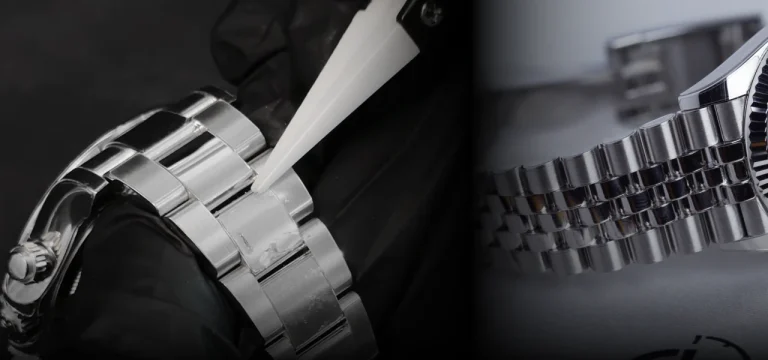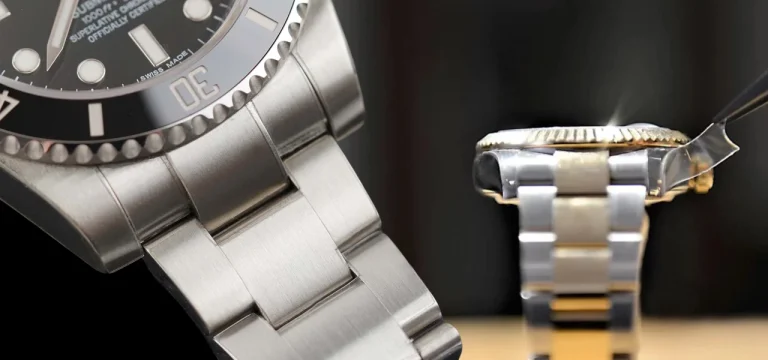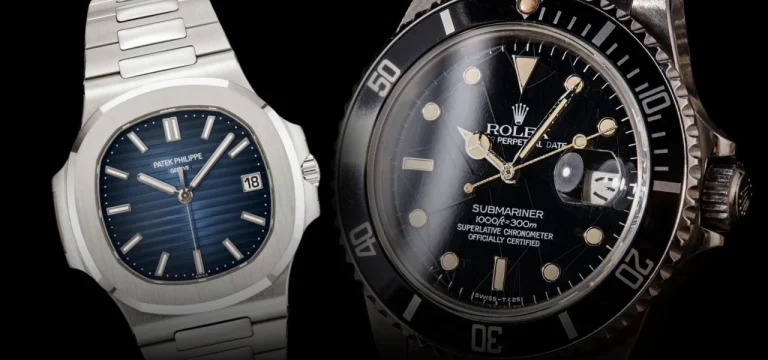


Just as you maintain your car or update your home, your Rolex needs attention to keep it looking its best.
Polishing your Rolex bracelet might seem straightforward, but it’s a topic of much debate among Rolex watch owner and lovers. While a polish can make your watch sparkle like new, some fear it might remove the very marks that tell its story.
In this guide, we’ll walk you through the right way to polish your Rolex bracelet, ensuring it shines without losing its personal touch.
Should You Polish Your Rolex Bracelet?

Deciding whether to polish your Rolex watch bracelet is not as straightforward as it may seem. While polishing can restore the watch to a like-new appearance and remove hairline scratches, it comes with risks.
Polishing removes a thin layer of metal, which can alter the watch’s shape and finish—especially the crisp edges of its lugs and crown guards. This change can significantly reduce the value of vintage watches, such as a Rolex GMT-Master, as collectors often prefer watches that retain their original condition, reflecting the watch’s life and history.
On the other hand, if you’re not concerned about collectability and just want your Rolex to look its best, polishing might be the right choice. However, it’s crucial to have the watch polished by a skilled professional or an authorized service center. Over-polishing can lead to irreversible damage, making the watch less appealing and significantly reducing its value.
Understanding Rolex Bracelet Finishes
Rolex bracelets blend style, comfort, and durability, each designed for specific wearing needs. The variety—Oyster, Jubilee, President, and Oysterflex—showcases Rolex’s commitment to quality.
Oyster Bracelet
The Oyster bracelet, with its robust three-piece flat link design, is an example of durability and versatility. Perfect for everyday use, sports, and formal wear, it is featured on iconic models like the Submariner and Datejust. Available in various metals, it includes clasp options such as the secure Oysterlock and adjustable Glidelock.
Jubilee Bracelet
The Jubilee bracelet, introduced in 1945, is an elegant five-piece link design with polished center links. It pairs with dressier models like the Datejust, offering refined comfort and a seamless look thanks to its hidden Crownclasp.
President Bracelet
Exclusive to Day-Date and Lady-Datejust models, the President bracelet features luxurious semi-circular links in 18k gold or platinum. Known for its prestige and concealed Crownclasp, it’s a symbol of elegance and status.
Oysterflex Bracelet
The Oysterflex bracelet combines a flexible metal blade with durable elastomer for sporty comfort. Found on models like the Yacht-Master, it includes Oysterlock and Glidelock clasps, perfect for active lifestyles.
Pearlmaster Bracelet
The Pearlmaster bracelet is Rolex’s most luxurious option, with rounded five-piece links crafted from 18k gold and often gem-set. Designed for the Pearlmaster collection, it combines elegance with a concealed Crownclasp for seamless wear.
Rolex bracelets are uniquely crafted for different styles and purposes. Here’s a quick comparison table for easy reference.
| Bracelet Type | Design | Key Features | Primary Models | Materials | Clasp Options | Purpose |
| Oyster |
|
|
|
|
|
|
| Jubilee |
|
|
|
|
|
|
| President |
|
|
|
|
|
|
| Oysterflex |
|
|
|
|
|
|
| Pearlmaster |
|
|
|
|
|
|
Tools and Materials Needed for Polishing
To polish a watch bracelet effectively, you’ll need the right tools and materials. Here’s a breakdown of what’s required:
1. Cleaning Tools
- Ultrasonic Cleaner: Ideal for removing dirt and grime from crevices. Use a cleaning solution like Simple Green diluted 1:1 with water.
- Soft Brush or Cloth: For manually cleaning areas that are delicate or hard to reach.
2. Polishing Tools
- Polishing Wheels:
- Stitched Cotton Wheel: For general polishing with light compounds.
- Soft Felt Wheel: For achieving a mirror-polished finish on flat surfaces like the sides of links.
- Satin Wheel: For brushing finishes with a consistent grain. Use at slower speeds for precision.
- Polishing Compounds:
- Menzerna Pink (P126): A light-cut compound ideal for brightening steel.
- Optional: Yellow (P175) or White (M5) compounds for higher shine, if needed.
3. Replacement Parts (if needed)
Pins and Spring Bars: Essential for tightening loose bracelet links. Check for wear and replace worn-out parts to maintain bracelet integrity.
4. Safety and Finishing Materials
- Microfiber Cloths: For wiping down the bracelet after polishing.
- Protective Gloves: Prevents fingerprints or residue during the process.
5. Equipment Setup
- Rotary Tool or Bench Polisher: Use at controlled speeds for polishing and brushing.
- Workspace: Ensure a clean, well-lit, and organized area for precision work.
Step-by-Step Guide to Polishing a Rolex Bracelet

Polishing a Rolex bracelet can refresh its appearance, but it’s important to do it correctly to avoid damage. Here’s a straightforward approach to help you safely polish your Rolex bracelet:
Step 1: Detach the Bracelet
Remove the bracelet from the watch case to prevent any accidental damage to the watch face during polishing.
Step 2: Clean the Bracelet
Wash the bracelet with a gentle soap and water solution to remove any dirt and grime that could nick or scratch the metal during polishing.
Step 3: Protect Brushed Surfaces
Use tape to cover any brushed or satin finishes. This prevents them from becoming shiny when you’re aiming to polish only the glossy parts.
Step 4: Polish the Shiny Areas
Take a polishing cloth and gently rub the exposed polished areas in circular motions. This helps enhance the shine and remove light scratches.
Step 5: Address Brushed Finishes
For areas meant to have a brushed finish, use a Scotch-Brite pad. Move it in one direction along the grain to restore or maintain the brushed look.
Step 6: Final Inspection and Cleaning
Inspect the bracelet for any missed spots or uneven polish. Wipe off any polishing residue with a clean, dry cloth.
Mistakes to Avoid When Polishing
Polishing a Rolex bracelet requires care and attention to detail. Avoiding common mistakes ensures the bracelet retains its original look, sharp edges, and value. Here’s what to avoid:
1. Polishing Brushed Surfaces
Polishing over brushed or matte finishes can ruin their texture and alter the bracelet’s appearance. Always use masking tape to protect brushed areas before you polish.
2. Using the Wrong Tools
Using abrasive or coarse tools can damage the metal, leaving deep scratches or uneven surfaces. Stick to appropriate tools, such as a Cape Cod polishing cloth for shiny areas and a Scotch-Brite pad for brushed finishes.
3. Over-Polishing
Over-polishing removes a thin layer of metal, leading to rounded edges and loss of the bracelet’s definition. Polish gently and focus only on light scratches, avoiding excessive use of compounds.
4. Polishing Without Cleaning
Polishing a dirty Rolex bracelet can cause dirt and debris to scratch the surface further. Always clean the bracelet thoroughly with a soft brush or ultrasonic cleaner before starting.
5. Applying Too Much Pressure
Excessive pressure during polishing can create uneven surfaces or damage the metal’s finish. Use light, consistent pressure and allow the polishing tool to do the work.
6. Skipping Inspection
Neglecting to inspect your work can result in uneven finishes or missed spots. Regularly check under good lighting to ensure even polishing and consistent results.
7. Using Dirty Polishing Cloths
Cloths contaminated with dirt or grit can cause additional scratches during polishing. Always use clean, soft microfiber cloths or polishing cloths free of debris.
8. Ignoring Bracelet Design
Treating all parts of the bracelet the same can result in uneven finishes, especially on intricate designs like Jubilee or Oyster bracelets. Pay close attention to polished and brushed areas, and treat each according to its finish.
Whether to polish your Rolex bracelet depends on personal preference, but improper polishing can lead to irreversible damage. For vintage models, avoiding over-polishing can help maintain their sharp edges and secure a better price if sold later.
When to Seek Professional Help
Here’s when you should consult an expert:
1. Deep Scratches or Damage
If the watch has significant scratches, dings, or dents that go beyond normal wear or surface-level imperfections, a professional can handle the polishing without removing too much metal or altering the shape.
2. Vintage or Collectible Rolex
Polishing a vintage Rolex can significantly impact its value, especially within the realm of vintage watch collecting. Professionals can evaluate whether to polish or leave the watch untouched to preserve its original integrity and appeal to collectors.
3. Uneven Brushed or Polished Surfaces
Restoring brushed and polished finishes on a bracelet or case requires specialized tools and techniques. Professionals ensure consistent grain and mirror-like polish without damaging the finish.
4. Loose or Damaged Components
If bracelet links, pins, or clasps are worn or loose, a professional can replace or tighten them without compromising the bracelet’s integrity.
5. Lack of Proper Tools or Experience
If you don’t have access to professional polishing tools or the skills to use them, it’s best to let an expert handle it. Improper tools or methods can cause irreversible damage.
6. Specialized Finishes
Certain Rolex models have unique finishes (e.g., satin, high-polish, or Cerachrom bezels) that require advanced skills to restore without affecting the surrounding surfaces.
7. Comprehensive Watch Servicing
When sending your Rolex for regular servicing (every 5–10 years), professionals often polish the watch as part of the service to restore its original luster and performance.
Maintaining the Polished Look
To keep your Rolex’s polished finish looking its best, regular care is essential. Follow these tips:
- Clean Regularly: Wipe the watch with a soft, dry microfiber cloth after use to remove fingerprints, dirt, and oils.
- Avoid Harsh Conditions: Keep the watch away from abrasive surfaces and avoid wearing it during rough activities to prevent scratches.
- Use Protective Storage: Store your Rolex in a watch case or pouch when not in use to minimize contact with hard surfaces.
- Periodic Cleaning: Rinse the watch under lukewarm water occasionally (ensure the crown is screwed down) to remove buildup from polished surfaces.
- Professional Touch-Ups: Take the watch to a professional every few years for light polishing to maintain its shine without over-polishing.
FAQs About Polishing Rolex Bracelets
Here are answers to some common questions of Rolex owners about polishing Rolex bracelets:
1. How often should a Rolex bracelet be polished?
Polishing a Rolex bracelet should only be done when necessary, such as to address visible scratches or dullness. It’s best to limit polishing to every 5–10 years, often during routine servicing. Over-polishing can remove metal over time, so it’s important not to do it too frequently.
2. Can polishing damage the bracelet?
Yes, improper polishing can damage the bracelet by removing too much metal, altering its shape, or dulling crisp edges. To avoid this, rely on professional polishing services.
3. Is it possible to restore heavily scratched bracelets?
Heavily scratched bracelets can often be restored by professionals using specialized tools and polishing compounds. While deep scratches may not be completely removed, they can usually be minimized to greatly improve the bracelet’s appearance.
Conclusion
Polishing a Rolex bracelet can restore its shine, but proper care is essential to avoid damage and make it valuable. By using the right techniques and tools, or seeking professional assistance, you can keep your watch in top condition while preserving its value.
- Clean thoroughly, protect brushed areas, and use proper tools like polishing cloths to maintain the original finish.
- Service your Rolex every 5–10 years to ensure durability and prevent excessive wear.
- Consult professionals for deep scratches, vintage models, or intricate finishes to avoid damaging the watch’s value.
For added long term protection, safeguard your investment with Watchskins protective films. Professionally applied, they protect your luxury watch from scratches and wear. Start protecting your timepiece today—WhatsApp us now!