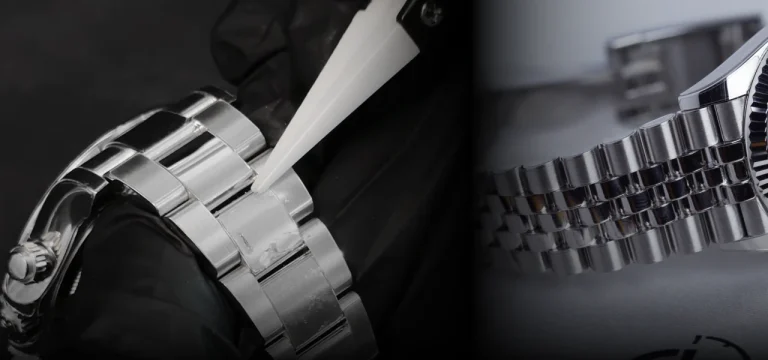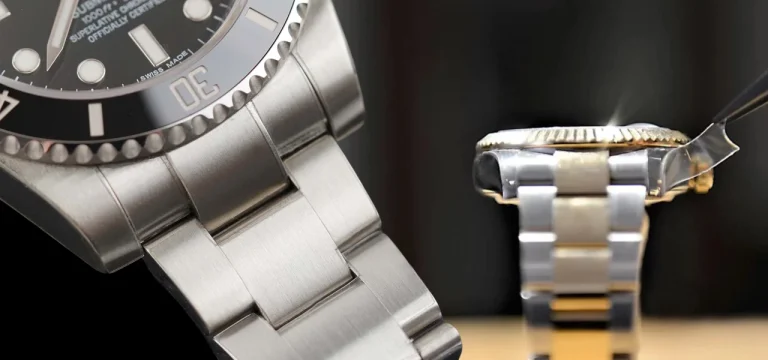

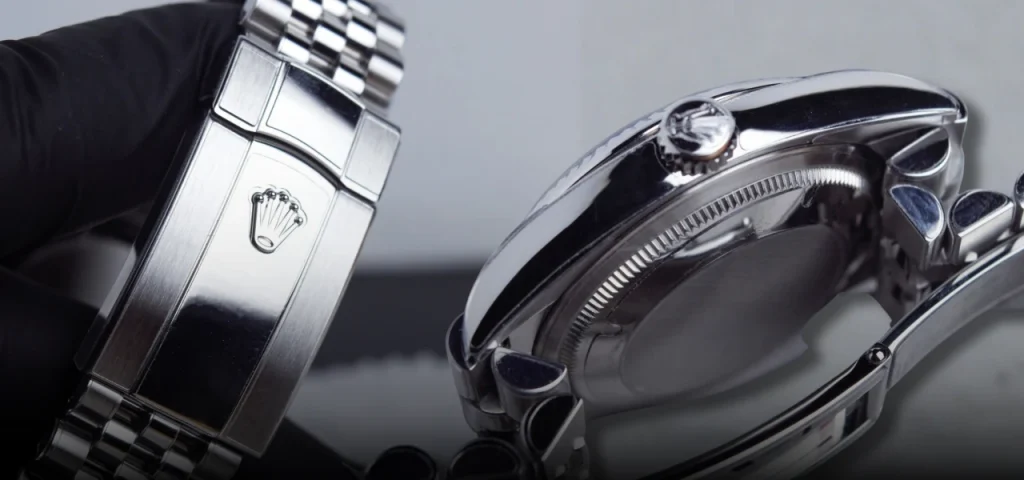
Watch protection film can leave adhesive residue after removal, but properly installed film in good condition can often be removed cleanly. Residue becomes more likely when the adhesive deteriorates, the film is exposed to prolonged heat and moisture, or the film is removed incorrectly.
This guide explains why residue can occur, what it looks like, how to approach removal safely and when professional removal may be the better option.
Does Watch Protection Film Leave Residue
Yes, watch protection film can leave residue, but the amount depends on the condition of the adhesive and how the film is removed. Film that remains flexible and securely bonded usually presents fewer removal problems than film that has become brittle, lifted or contaminated around the edges.
Several factors affect whether adhesive remains after removal:
- Adhesive condition affects whether the adhesive releases with the film.
- Heat, UV, sweat and moisture can change the condition of the film and adhesive during wear.
- Watch finish affects how visible remaining adhesive appears.
- Removal technique affects whether the film and adhesive separate evenly.
- Lifted edges allow dirt, oils and moisture to collect around exposed adhesive.
Long-term wear can make removal more difficult, but age alone does not determine whether residue will remain.
Why Can Watch Protection Film Leave Residue
Once installed, the film and adhesive are exposed to the conditions around the watch during everyday wear. Over time, this can affect how the film and adhesive behave during removal.
Adhesive Aging
Watch protection film uses adhesive to maintain contact with the watch during daily wear. The adhesive’s removal behaviour can change after prolonged exposure to heat, moisture, UV light and repeated temperature changes.
These changes can affect whether the adhesive releases with the film or remains partially attached to the surface of your watch.
Film condition therefore provides a useful removal indicator. Brittle film, lifted edges, uneven adhesion or adhesive separation can indicate that removal requires additional care.
Incorrect Removal
Pulling protection film quickly or at an unsuitable angle can cause the film or adhesive layer to separate unevenly. A slow, controlled peel reduces unnecessary stress on the film and underlying watch surface.
If the film tears, resists removal or requires significant force, stop rather than using metal tools or aggressive scraping.
For the complete process, follow the step-by-step guide to removing watch protection film without damage.
Heat and Everyday Exposure
Direct sunlight, heat, humidity, perspiration and moisture can affect the condition of protective film over time. Heat can temporarily soften the adhesive, which may affect how the film feels or behaves on a hot day. Over longer periods, heat, UV exposure and everyday wear can gradually affect the film and adhesive. These changes may make removal more difficult, particularly when the film has been left on for an extended period.
Lifted Film Edges
Once a film edge lifts, the exposed area can collect dirt, sweat, oils and moisture. Contaminants can accumulate around the adhesive boundary and create a dark, dirty or uneven-looking edge.
This contamination should not automatically be identified as adhesive residue. Residue refers to adhesive material that remains after film removal, while contamination can consist of external material collected during wear. Consider replacing film that develops persistent peeling, bubbling or edge separation.
Can Watch Protection Film Residue Be Prevented
Residue cannot always be prevented. Proper surface preparation, suitable film, appropriate aftercare and controlled removal can reduce avoidable removal problems.
You can reduce the risk of difficult removal by controlling the factors that affect the film and adhesive:
- Choose a protective film with an adhesive designed for controlled removal
- Clean the watch before installation to prevent oils, dust and contaminants from becoming trapped beneath the film
- Follow product-specific aftercare instructions to protect the film during its service life
- Limit prolonged heat and chemical exposure that may affect the film or adhesive
- Replace deteriorating film when persistent lifting, brittleness, cloudiness or loss of adhesion develops
- Remove film slowly instead of pulling or scraping it from the watch
What Does Watch Protection Film Residue Look Like
Adhesive residue can appear in several ways depending on how much remains and where it is located.
Common signs include:
- A sticky or tacky patch
- A thin line around a former film edge
- A hazy area
- Dirt attached to remaining adhesive
- Small areas that catch the light differently
- A slightly different surface texture
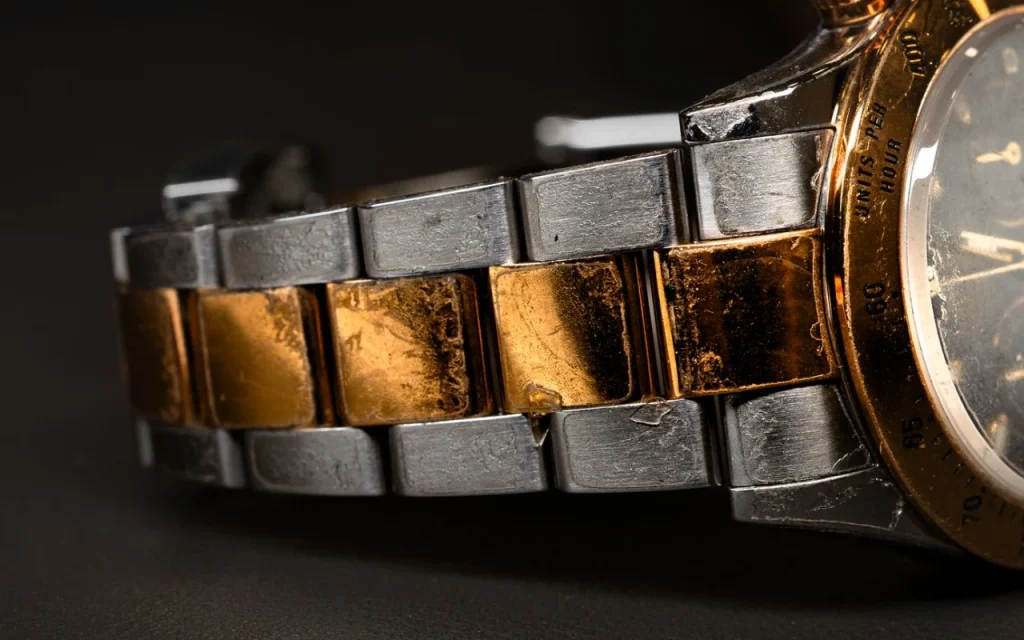
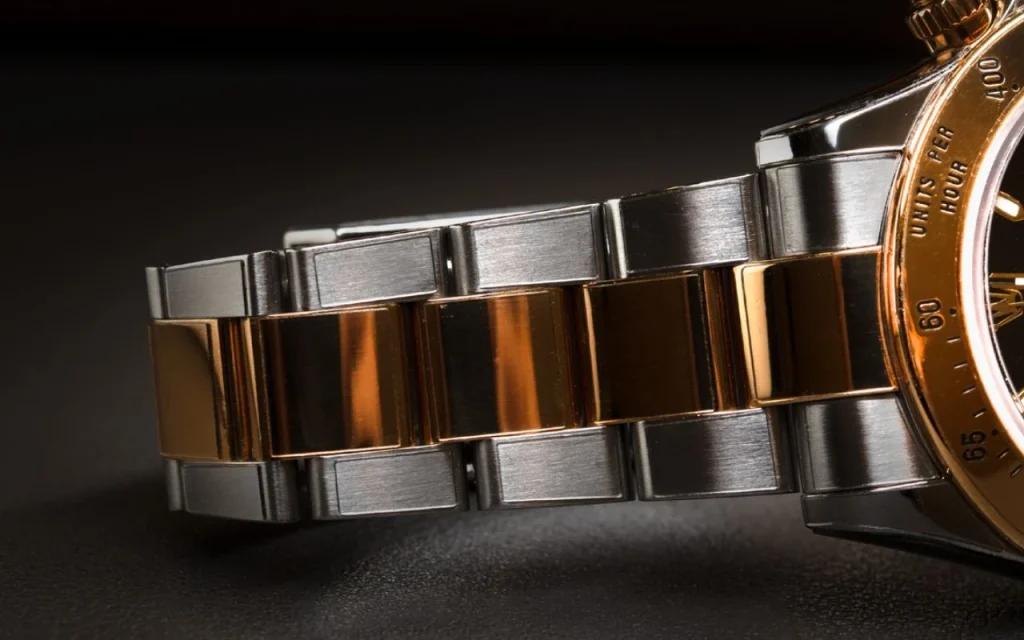
Residue can be particularly noticeable on highly polished surfaces because the reflective finish makes small changes easier to see. It can also be mistaken for ordinary dirt or a change in the finish.
If the surface looks slightly sticky or hazy immediately after film removal, appropriate cleaning may resolve the appearance. If the area still looks different after suitable cleaning, stop rubbing it and consider having your watch inspected.
Is Adhesive Residue the Same as Damage
No. Adhesive residue is material left on the watch surface after film removal, while surface damage affects the watch itself. Residue may feel sticky or appear hazy and can sometimes be removed through appropriate cleaning. Surface scratches or permanent finish changes remain after cleaning.
If you are unsure whether you are looking at residue or a change to the watch itself, avoid attempting increasingly aggressive cleaning methods.
How to Tell the Difference
| What You See | What It May Indicate |
| Sticky or tacky area | Adhesive residue |
| Thin line around the old film edge | Remaining adhesive or accumulated contamination |
| Hazy appearance that disappears after cleaning | Residue or surface contamination |
| Micro scratches that remain after cleaning | Possible surface damage |
| Persistent change in texture or finish | Possible finish alteration; professional inspection may be appropriate |
If cleaning does not change the appearance, a professional can determine whether the remaining mark is adhesive residue or an actual change to the watch’s finish.
Does Removing Residue Require Polishing the Watch
No. Adhesive residue normally requires cleaning rather than refinishing. Polishing removes material from the watch surface and can alter the original finish when performed unnecessarily or incorrectly.
Start with non-abrasive cleaning. If the residue remains, professional removal is preferable to repeated rubbing, abrasive compounds or unverified solvents.
Does Residue Show More on Polished Watch Surfaces
Adhesive residue can appear more noticeable on highly reflective finishes because haze, edge lines and surface contamination alter reflected light. Brushed or satin finishes may make minor residue less visually obvious, but they still require careful cleaning. Avoid abrasive products or aggressive rubbing that could alter the original finish.
How to Remove Adhesive Residue From a Watch
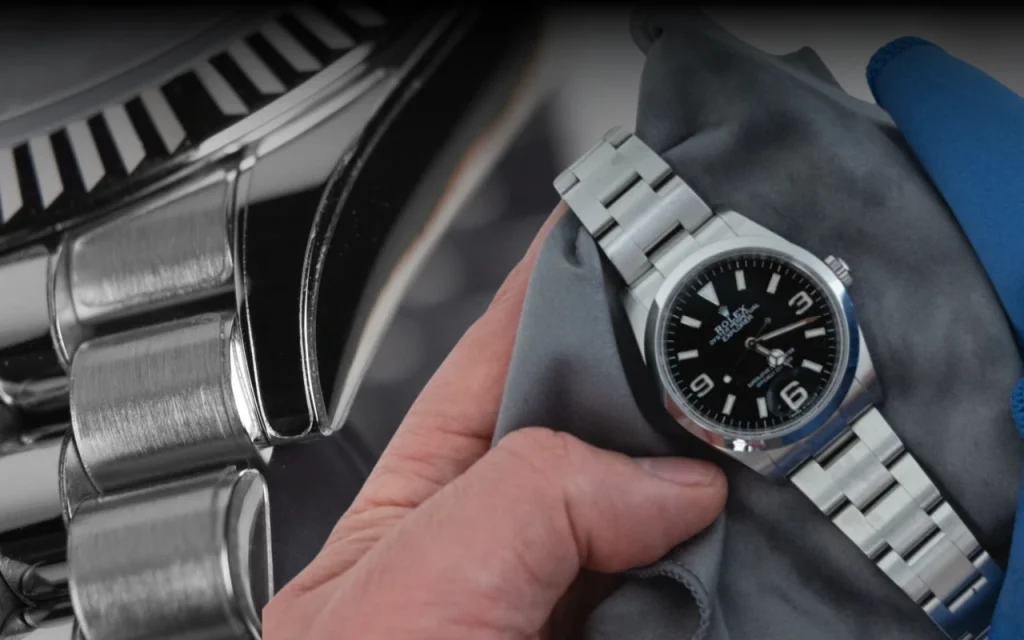
Start with the least aggressive method. The objective is to remove remaining adhesive without changing the watch’s original finish. If the film itself is still on the watch, follow our step-by-step guide to removing watch protection film without damage first.
- Wipe the area with a clean, dry microfiber cloth to lift loose adhesive and dust.
- Dampen the cloth with lukewarm water and a small drop of mild soap. Hold it against the residue, then wipe gently in one direction.
- If adhesive remains, check the watch manufacturer’s cleaning guidance before applying a solvent or cleaning agent. Use only a product suitable for the watch material, coating and finish.
- Pat the area dry and check it under good light from a few angles.
- If adhesive is still visible, stop. Blades, acetone, industrial solvents and polishing compounds can damage coatings, gaskets or the finish, so bring your watch in for professional removal instead.
Avoid blades, aggressive scraping, abrasive polishing and unverified solvents. If the residue cannot be removed using a material-compatible cleaning method, consider professional removal.
When Does Watch Protection Film Require More Care During Removal
Old film does not automatically damage a watch or leave residue. Film condition provides a more useful warning than age alone.
Removal may require additional care when:
- Film becomes brittle and breaks instead of peeling consistently
- Edges lift while other areas remain firmly attached
- Film tears during controlled removal
- Adhesive remains on the surface after the film releases
- Contamination accumulates beneath lifted edges
- Removal requires increasing force rather than a controlled peel
If the film cannot be removed using a controlled approach, professional removal may be preferable for a valuable or delicately finished watch.
Does Film Quality Affect Glue Residue
Yes. Film material and adhesive quality can affect whether protection film releases cleanly or leaves adhesive behind. Removal results also depend on film condition, environmental exposure, installation and removal technique.
However, the residue rarely comes from the film itself. It comes from the adhesive layer underneath, and from how well that adhesive stays bonded to the film as you peel it away.
TPU, or thermoplastic polyurethane, is a flexible polymer used in some watch protection films. Specific TPU films may also be designed to provide properties such as self-healing capabilities or resistance to discoloration, depending on their formulation and construction.
Which Film Characteristics Can Increase Residue Risk
Watch protection film consists of the protective film layer and an adhesive layer that holds the film to the watch surface. When removal goes well, the adhesive releases with the film. Residue can occur when part of the adhesive separates from the film or remains attached to the watch surface during removal.
Film characteristics can influence how cleanly the material releases:
- Adhesive stability: Adhesive that deteriorates during environmental exposure may become harder to remove cleanly.
- Adhesive-to-film anchorage: Weak anchorage can allow adhesive to separate from the film during removal.
- Film integrity: Film that becomes brittle or tears easily can make controlled removal more difficult.
- Material formulation: Different polymers, additives and adhesive systems can behave differently during long-term wear and removal.
These characteristics provide more useful indicators of removal performance than price alone.
Can Quality Film Still Leave Residue
Yes. Even well-made protection film can leave some adhesive residue, particularly after prolonged wear, environmental exposure or deterioration. Controlled removal can reduce the risk, but it cannot guarantee residue-free removal.
Does Installation Quality Affect Adhesive Residue
Yes. Proper surface preparation and accurate fitting can reduce adhesion problems caused by trapped oils, dirt and contaminants.
Professional installation does not guarantee residue-free removal, but proper surface preparation and fitting can help reduce removal issues.
How to Reduce Removal Problems
Good aftercare can help maintain the film and make eventual replacement easier.
Avoid Prolonged Exposure to Intense Heat
Avoid prolonged or direct exposure to intense heat sources such as:
- Hotpots
- BBQs
Repeated heat exposure can affect the condition of the film and adhesive over time. If the watch becomes unusually hot, allow it to return to a normal temperature before handling or cleaning the film.
Keep the Film Clean
Once the first 7 days after installation have passed, Watchskins recommends gently rinsing your watch and patting it dry with the light-colored cloth provided.
Avoid vigorous wiping, which can move dust or other particles across the surface and toward the film edges. Pat the watch dry instead.
Keeping the film clean also reduces the accumulation of sweat, oils and contaminants around edges that begin to lift.
When Should Watch Protection Film Be Replaced
Watchskins gives a typical protection-film lifespan of approximately 6 to 24 months, but film condition provides a better replacement indicator than age alone. Wear frequency, heat, sunlight, cleaning and environmental exposure can affect usable life.
Consider replacement when the film develops:
- Persistent lifting or peeling
- Bubbling
- Cloudiness
- Yellowing or discoloration
- Brittleness
- Loss of adhesion
- Heavy scratches or visible wear
Should You Remove Watch Protection Film Yourself
You can consider DIY removal when the film lifts easily and peels consistently without significant resistance. Stop and seek professional removal if the film becomes brittle, tears repeatedly, leaves extensive adhesive, covers difficult areas or requires increasing force.
Can Watch Protection Film Be Reused After Removal
Generally, no. Watch protection film is designed for one-time application and is usually not suitable for removal and reapplication. Once removed, the film may lose its adhesive properties, collect dust or debris, or fail to adhere properly.
Trying to reinstall the same piece can result in:
- Poor adhesion
- Bubbles
- Trapped particles
- Misalignment
- Uneven edges
If continued protection is required, fresh film is the better option.
Final Word
Watch protection film can leave residue after removal, but it is not something that should automatically be expected. Film condition, adhesive behavior, environmental exposure and removal technique all affect how cleanly it comes away. With proper installation, regular aftercare and careful removal, replacing the film can be a straightforward part of maintaining the watch.
Key Takeaways
- Residue can happen, but it does not necessarily mean the watch is damaged.
- Film condition, exposure and removal technique can affect how cleanly it comes off.
- Avoid blades, aggressive scraping and unsuitable chemicals when removing film or residue.
- Replace worn film when it becomes cloudy, yellowed, scratched or starts lifting.
For watch owners looking to protect their timepieces from scratches and everyday cosmetic wear, choosing the right protection film matters. Watchskins uses 3M TPU protection film to provide reliable coverage while helping preserve the timepiece’s original finish without leaving stubborn adhesive residue that could affect its appearance or resale value.