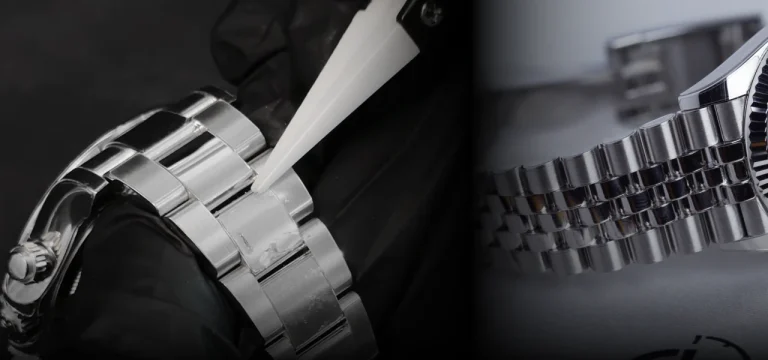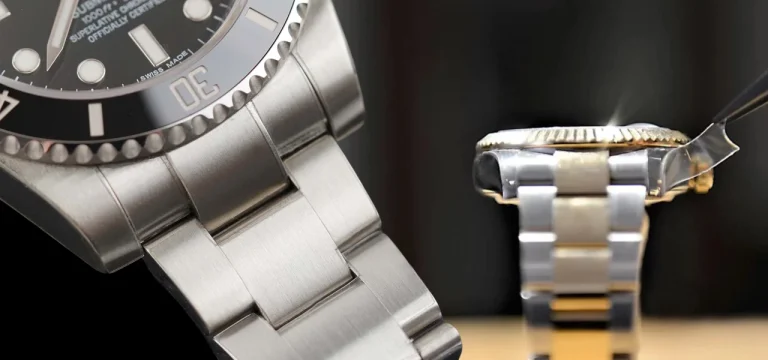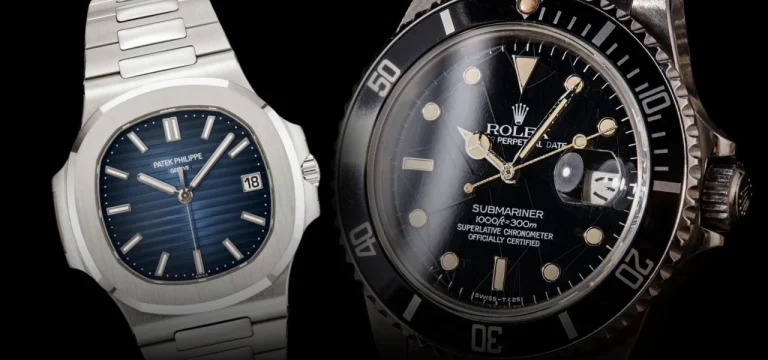


Noticed new scratches on your stainless steel watch recently? It happens to almost every watch owner sooner or later. Even durable watches can develop scratches on a stainless steel watch case or bracelet through daily wear, leaving many owners wondering how to restore their watch’s original look.
Most scratches come from everyday moments. Your watch may rub against a desk while typing, brush against door handles, or knock lightly against hard surfaces during the day. Over time, these small contacts can lead to visible scratches on the watch case and bracelet.
The good news is that many of these marks can be removed with the right approach. Learning how to remove scratches safely helps protect both the appearance and long-term value of your watch. In this guide, you will learn how to identify scratch types, practical ways to remove scratches from your watch, and how to prevent new ones from forming.
Polished vs Brushed Stainless Steel: Why It Matters for Scratches
Before attempting to remove scratches from a watch, it is important to understand the type of finish you are working with. Stainless steel watches typically feature either polished or brushed surfaces. Each finish reacts differently to scratches and requires a different approach for repair.
Polished Stainless Steel
Polished steel has a smooth, mirror-like appearance that reflects light clearly. This finish is commonly found on case sides, bezels, and certain bracelet links.
Because the surface is reflective, scratches can appear more noticeable. Light marks are often removed with watch polishing cloths or metal polishing compounds that gently restore the shine.
Brushed Stainless Steel
Brushed steel has a fine directional grain, also called a satin finish. You will often see it on lugs, bracelet tops, or clasp surfaces.
Unlike polished steel, brushed finishes require grain restoration rather than polishing. Rubbing randomly can ruin the texture.
Note that many watches combine both finishes, so each area must be treated separately when dealing with scratches on stainless steel watch surfaces.
How to Tell If a Scratch Is Light, Moderate, or Deep
Before you try to remove scratches from a watch, it helps to understand how severe the damage is. Not every scratch needs the same solution. Some marks are superficial, while others require more careful refinishing.
Light hairline scratches usually affect only the surface finish. Moderate scratches are more visible but can often be removed at home. Deep scratches cut further into the metal and may require professional refinishing to restore the case properly.
The Fingernail Test
A simple way to judge scratch depth is the fingernail test.
| Test Result | Scratch Type | What It Means |
| Nail does not catch | Light scratch | Usually safe for basic polishing |
| Nail catches slightly | Moderate scratch | May need more careful treatment |
| Nail catches clearly | Deep scratch | DIY removal can be risky |
The deeper the scratch, the more metal must be removed to level it out. That is why more serious damage to a watch should always be approached with caution when learning how to remove scratches.
Should You Remove the Scratch at All
Before you try to remove scratches from a watch, it is worth asking a simple question: Should you remove them at all?
Light wear is a normal part of ownership. Many watches develop small marks through everyday use, and these scratches on stainless steel watch surfaces often reflect regular wear rather than damage.
It is also important to remember that polishing removes metal. Over time, repeated polishing can soften sharp edges and change the original case lines. For vintage or collectible watches, over-refinishing may even reduce appeal or resale value.
If a watch has sentimental or collector value, restraint can sometimes be the better choice when deciding how to remove scratches.
How to Prevent Scratches on Stainless Steel Watches
When it comes to scratches on a stainless steel watch, prevention is often better than cure. While it is possible to remove scratches from a watch, avoiding them in the first place helps preserve the finish and keeps your watch looking sharp for longer.
Be Aware of Daily Contact Points
Many scratches come from simple everyday contact. Try to be mindful of surfaces such as:
- Desk edges while typing
- Door handles and metal railings
- Kitchen countertops or hard tables
Small habits can make a big difference over time.
- Store Your Watches Properly: When you are not wearing your watch, store it separately. Bracelets and cases rubbing against each other inside a drawer can easily cause unnecessary scratches.
- Keep Your Watch Clean: Dust and debris can act like fine abrasives. Regularly wiping a watch with a soft microfiber cloth helps reduce surface wear.
- Rotate Your Watches: If you own multiple watches, rotating them helps limit constant exposure to daily knocks and friction.

Apply a Watch Protection Film
Even with careful habits, daily wear can still lead to scratches on a stainless steel watch case or bracelet over time. Areas such as the clasp, case sides, and bracelet links are especially prone to contact during normal use. If you want to protect these high-contact areas without changing the appearance of a watch, a protective layer can help.
One practical solution is a watch protection film. This is a thin, transparent layer designed to sit on the surface of the watch and absorb minor friction from everyday contact. Because the film is clear and precisely cut, it helps preserve the original finish while reducing the chances of light scratches developing.
Protection films are often applied to areas that experience the most wear, including:
- Case sides
- Bracelet links
- Clasp surfaces
- Bezel edges
For owners who wear their watches daily, this added layer can help reduce the need to remove scratches from the metal later on. It is a simple way to maintain the look of your watch while still enjoying it in everyday situations.
What You Need Before Removing Scratches
If scratches are already present, proper preparation is the first step before attempting to remove scratches from a watch. Having the right tools helps you work carefully and avoid causing additional marks on the surface.
Common materials used when learning how to remove scratches include:
- Microfiber cloth
- Mild soap and water for cleaning
- Masking tape
- Watch polishing cloth or metal polish for polished surfaces
- Fine abrasive pads or very fine sandpaper for brushed surfaces
- Cotton buds or soft applicators for precise work
Before starting, clean the watch with mild soap and water to remove dirt or debris that could worsen scratches on stainless steel watch surfaces. Dry the watch thoroughly.
Then use masking tape to protect sensitive areas such as the crystal, bezel insert, crown, and nearby surfaces that should not be polished.
How to Remove Light Scratches on Polished Stainless Steel
Light scratches on polished areas are often the easiest to remove. These marks commonly appear on polished case sides, clasps, or shiny bracelet links. Because polished steel reflects light strongly, even small marks can appear more noticeable on a watch.
Step 1: Apply a Small Amount of Polish
Place a small amount of metal polish or use a watch polishing cloth on a soft microfiber cloth. You only need a minimal amount. Using too much polish can make it harder to control the process.
Step 2: Polish Gently in Controlled Motions
Rub the scratched area gently using light, even pressure. Work slowly and focus on one small section at a time. This controlled approach helps remove scratches on stainless steel watch surfaces without affecting nearby areas.
Step 3: Check Your Progress Often
After a few passes, wipe away the residue and inspect the surface. If needed, repeat the process carefully. Avoid polishing aggressively in one attempt when learning how to remove scratches.
Important Things to Keep in Mind
- Do not polish too hard
- Avoid touching nearby brushed sections
- Deep scratches may not disappear completely
In most cases, the goal is to remove scratches from view or reduce their visibility, not to restore a perfect factory finish in one step.
This method can also be used on luxury stainless steel watches, but only for very light hairline scratches on polished areas such as clasps, bracelet links, or case sides. High-end watches often feature precise finishing, so aggressive polishing or polishing on the wrong surface can alter the original case lines.

How to Reduce Scratches on Brushed Stainless Steel
Scratches on brushed stainless steel require a different approach from polished surfaces. Instead of restoring shine, the goal is to recreate the original grain pattern. Many scratches on stainless steel watch cases and bracelets appear on brushed areas such as bracelet links, clasps, and the top of lugs.
Follow the Direction of the Grain
Brushed steel has a clear directional texture. When working on the surface, always move in the same direction as the existing grain. This helps maintain the satin finish and keeps the repair looking natural.
Use a Fine Abrasive Carefully
A very fine abrasive pad or suitable refinishing tool can help reduce visible scratches. Work lightly and gradually, focusing on small sections at a time. The aim is to blend the mark into the surrounding finish rather than attempting to remove scratches from a watch in a single pass.
Important Things to Avoid
Keep these precautions in mind when learning how to remove scratches on brushed steel:
- Do not rub in circles
- Avoid uneven pressure that may create flat spots
- Do not overwork the surface
A careful approach helps blend scratches into the brushed pattern while preserving the watch’s original look.
Common Mistakes That Can Make Stainless Steel Scratches Worse
Trying to remove scratches from a watch can sometimes make the problem worse if the wrong technique is used. Stainless steel is durable, but improper polishing or sanding can damage the original finish of a watch.
Here are some common mistakes to avoid when dealing with scratches on stainless steel watch surfaces:
- Using the same method for polished and brushed finishes
- Skipping the cleaning step and rubbing dirt or grit into the metal
- Forgetting to tape off nearby parts such as the crystal or bezel
- Using abrasives that are too coarse
- Working against the grain on brushed steel
- Polishing too frequently or too aggressively
- Trying to remove scratches from deep marks completely at home
If a scratch is deep or located near delicate surfaces, it may be safer to leave the repair to a professional watchmaker.
Final Word
Scratches on stainless steel watches are common, but many can be reduced with the right technique and a bit of care. That said, the most effective way to keep a watch looking its best is to avoid the problem in the first place.
At Watchskins, we make precision-cut protection film designed specifically for luxury timepieces like Rolex, Audemars Piguet, Patek Philippe, and more. Each protection film is custom-cut and tailored to fit your exact model, so your watch stays protected without changing its appearance.
If you would rather spend less time polishing and more time wearing, explore our watch protection films and see if your model is covered.
Key Takeaways
- Identify the finish before fixing scratches. Polished and brushed stainless steel requires different techniques, and using the wrong method can make scratches more noticeable.
- Assess the scratch depth first. Light hairline marks can often be removed at home, but deep scratches that catch your fingernail are usually better handled by a professional.
- Prevention reduces the need for polishing. Simple habits and protective solutions like watch protection film can help minimise future scratches and keep your watch looking better for longer.
Protect your watch before scratches appear. Watchskins Ultra protection films are designed to shield your watch from daily scuffs and light scratches while preserving its original look and finish. Explore Watchskins to keep your watch looking its best without polishing or altering the case.