

A scratch on your watch might seem like a small thing. But when it’s time to sell, small things have a way of becoming big conversations.
A light hairline on the bracelet is practically a rite of passage for a daily-wear watch. Buyers expect that. What they don’t expect and won’t overlook is a deep gouge on the case, a chipped sapphire crystal, or lugs polished down to a blur. Those details quietly shift the offer.
So, how much does a scratch actually devalue a watch? It depends on where the scratch is, how deep it goes, what the watch is made of, and who’s buying it. Here, you’ll find out which ones matter most, why they matter, and what to do about them before you sell.
How Much Can Scratches Devalue a Watch
Scratches don’t automatically devalue a watch. Their impact depends on factors such as the location and severity of the damage, the watch’s brand, model, rarity, overall condition, and whether any refinishing has affected its originality.

Although every watch is valued individually, buyers and collectors generally assess cosmetic damage as follows:
Light hairline scratches
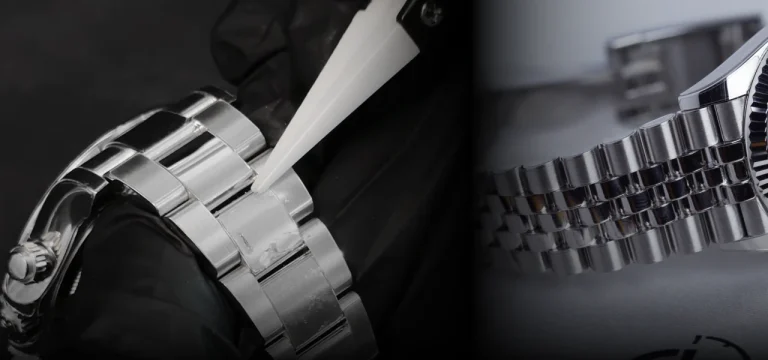
Usually have minimal impact on resale value. Minor hairline marks on the bracelet, caseback, or clasp are considered normal signs of wear on most pre-owned watches and often have little effect on price.
Visible scratches on the case or bezel
May have a moderate impact on resale value, particularly when located on prominent areas such as the bezel, lugs, or polished case surfaces. Buyers may negotiate a lower price to reflect the watch’s cosmetic condition.
Deep scratches, dents, or gouges
Can have a significant impact on value. More severe damage may raise concerns about possible impacts to the watch and the potential cost of refinishing or further inspection.
Crystal damage
Often has a significant impact because a scratched, chipped, or cracked crystal may require replacement before resale. The cost varies depending on the brand, model, and type of crystal.
Dial damage
Among the most serious forms of cosmetic damage, particularly on vintage or collectible watches. Because original dials are highly valued, scratches, moisture damage, or refinishing can substantially reduce desirability and resale value.
Over-polishing
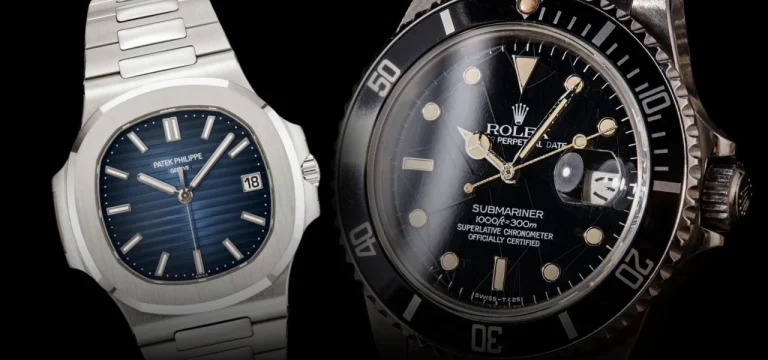
This is the hidden devaluer most sellers don’t anticipate. When a watch is buffed to remove scratches, the process removes metal, softens sharp edges, and rounds off the crisp lines that define the case. On a Patek Philippe, an Audemars Piguet Royal Oak, or any watch with brushed-polished surfaces, over-polishing is considered irreversible damage. Collectors will pay more for a scratched original finish than a polished one that has lost its factory geometry.
What Determines the Final Value
These factors are general guidelines, not fixed rules. The same scratch can affect two watches very differently depending on brand, model, and overall condition.
A light mark on a tool watch like a Casio G-Shock will usually have little to no impact on resale value. However, the same type of scratch on a high-end luxury watch can be more noticeable to buyers and may influence negotiations.
The variables that matter most:
- Brand and model: Rolex, Patek Philippe, and AP hold value well even with light wear. Watches from brands with weaker secondary market demand are more sensitive to condition.
- Originality: An unpolished, unserviced watch with honest wear often sells for more than a polished one, especially among collectors.
- Market demand: High-demand references sell despite imperfections. Lower-demand models need to be priced more sharply to move.
- Repairability: Replacing a crystal is straightforward. A scratched dial, over-polished case, or cracked movement component is not.
Most buyers price in light surface wear. Structural damage, dial issues, and over-polishing are where real value is lost.
Why Some Scratches Matter More
Watch buyers do not judge all scratches equally. A small mark hidden on the clasp will usually matter less than a deep scratch across the bezel, sapphire crystal, or the case front. The impact on resale value often comes down to three things:
- Severity: Hairline marks and desk-diving scratches are common on daily-wear watches. Deep gouges, dents, or heavy wear suggest rougher use and may require refinishing.
- Visibility: Scratches on polished surfaces, the crystal, bezel, or case are easier to notice. Bracelet and clasp scratches are usually more accepted.
- Repairability: Some scratches can be improved with careful professional polishing. Others may need part replacement, while excessive repair can reduce originality.
This is why a scratched watch may still sell well if the damage is minor, expected, and located in a low-impact area.
How to Check the Severity of a Scratch Before Selling
Once you understand that not all scratches carry the same weight, the next step is to assess what you’re actually dealing with. A quick, careful inspection can help you separate harmless wear from damage that might affect your watch’s value.
- Inspect the watch under natural light rather than harsh spotlights, as strong lighting can exaggerate minor surface marks.
- Run a clean fingertip gently across the scratch. If you can feel it, the damage may be more serious than a surface mark and could require more than simple cleaning.
- Check where the scratch is located, whether on the bracelet, clasp, case, sapphire crystal, acrylic crystal, bezel, or dial.
- Consider whether the wear looks normal. Light marks on the bracelet or clasp are expected, while scratches on edges, lugs, the crown, or near the crystal may raise concerns.
- Avoid polishing the watch before getting a valuation, as improper polishing can remove metal, soften the case shape, and reduce originality.
Where the Scratch Is Located Matters
The location of the scratch can matter as much as the scratch itself. Buyers look at each part of the watch differently because some areas are easier to repair, while others affect originality, appearance, or long-term value.

| Watch Part | How It Affects Resale Value |
| Bracelet and Clasp | These are the most common areas for scratches and are usually seen as normal wear. Heavy gouges, stretched bracelets, or missing links can reduce value. |
| Case | The case defines the watch’s shape and originality. Deep case scratches may require polishing, which can soften sharp edges and alter the finishing. |
| Bezel | The bezel is highly visible and can be expensive to replace. Scratches or dents here can noticeably affect value. |
| Crystal | Light marks may be acceptable on acrylic. A sapphire crystal is more scratch-resistant, but chips or cracks often require replacement. |
| Dial and Hands | Damage here is more serious. Dial originality is especially important for vintage, rare, and collectible watches. |
Do Scratches Affect Rolex Watches Differently
Rolex buyers on the secondary market are often particularly attentive to originality and condition, which can make cosmetic issues more influential during resale.
The Originality Premium is Real
Sport models like the Submariner, GMT-Master II, and Daytona come from the factory with sharply defined brushed and polished surfaces. When those surfaces are buffed, the case loses its crisp transitions and the lugs lose their angles. An untouched case with honest scratches will consistently outperform a polished one at resale, depending on model and condition.
On the secondary market, dealers and knowledgeable collectors often describe unpolished watches as “all original” or “untouched” and price them accordingly. A polished Submariner that looks clean can actually sell for less than a scratched one that hasn’t been touched.
Vintage Rolex: Original is Non-Negotiable
For vintage references, such as pre-1990 Submariners, Paul Newman Daytonas, or early Explorer IIs, the stakes are significantly higher. These watches are bought and sold based on how close they are to their original factory state. A vintage Rolex with original tritium patina, unpolished lugs, and intact finishing commands serious collector premiums. The same watch with a re-polished case or service-replaced parts can lose a significant portion of its value, sometimes 20% to 40% or more, depending on the model and extent of restoration.
Replacement parts are another key concern for vintage Rolex watches. Non-original crowns, crystals, dials, or bezels can each reduce value independently. A replacement dial on a vintage Daytona, for example, is considered a significant devaluation, even if the substitute looks identical.
Should You Polish a Scratched Watch Before Selling
Polishing can improve the appearance of a scratched timepiece, but it is not always the best solution before resale. For modern, non-rare watches, light professional polishing may help the watch look cleaner and reduce visible wear and tear.
Here are some of the risks of polishing:
- Polishing removes metal from the watch case, bracelet, lugs, bevels, and edges.
- Poor polishing can blur the factory finishing and alter the original shape.
- Over-polishing can soften sharp lines and reduce the watch’s value.
- It is one of the biggest concerns for a serious watch owner when preparing a timepiece for resale.
Before polishing, get a valuation first. In some cases, the buyer may prefer the watch in original condition, even with light wear. Vintage, limited-edition, or rare models should often be assessed by a professional buyer, watchmaker, or authorised service center before any work is done. Owners should also avoid DIY polishing, as it can create uneven surfaces or worsen the damage.
Other Condition Factors That Affect Resale Value
Note: The following ranges are general estimates based on secondary-market trends. Actual impact varies by brand, model, rarity, and buyer demand.
Scratches are easy to spot, but some of the biggest devaluers are less obvious. Serious buyers look beyond surface wear. They assess the whole timepiece, including documentation, service history, originality, and signs of hidden damage.
Box and Papers
Box and papers can add meaningful value, especially for Rolex, Patek Philippe, Audemars Piguet, and other highly traded brands. For entry-level luxury watches, the increase is often modest, while for Rolex and higher-end models, complete sets can have a more noticeable impact, particularly in the pre-owned and vintage markets.
Service History
A clear service history gives buyers confidence. Without it, buyers may discount the price to account for potential future servicing costs, which can vary depending on the model and condition.
Original Parts
Originality is one of the strongest drivers of value. Non-manufacturer parts can reduce value, sometimes significantly, depending on the component and model. This applies to crowns, crystals, dials, bezels, bracelets, and movement parts. Even if the watch looks clean, buyers may treat it as compromised if key components are not correct to the brand or reference.
Crown Damage
The crown is small, but it matters. A damaged crown can negatively affect resale value, as it raises concerns about water resistance and potential movement contamination. It also raises practical concerns, since dust or moisture can enter the watch and affect the movement.
Water Damage
Water damage can significantly reduce resale value, especially if it affects the dial or movement. The extent depends on severity and whether components need replacement or restoration.
Dial Condition
The dial has a major effect on the watch’s value. A refinished dial can significantly reduce value, particularly for vintage and collectible watches where originality is critical. In many cases, original patina is preferred over replacement or restoration.
Modifications and Engravings
Personal engravings, aftermarket diamonds, custom dials, and third-party bezels can narrow the buyer pool. Some owners may see these as upgrades, but many collectors see them as changes that move the watch further away from its original condition.
That said, a scratched watch with full box, papers, spare links, and service records can still outperform a cleaner-looking watch with missing documentation, non-original parts, or an unknown service record. Buyers are not pricing scratches alone. They are pricing the full picture.
How to Reduce Scratch-Related Value Loss
The best way to protect resale value is to prevent avoidable scratches in the first place. A few simple habits can help your watch stay cleaner for longer:
- Store watches separately in a watch box, roll, or pouch.
- Keep your watch away from keys, jewellery, coins, and metal accessories.
- Remove it during gym sessions, moving, repair work, or manual tasks.
- Wipe dust, grit, and sand gently with a microfiber cloth.
- Be careful around desk edges, laptops, door frames, and walls.
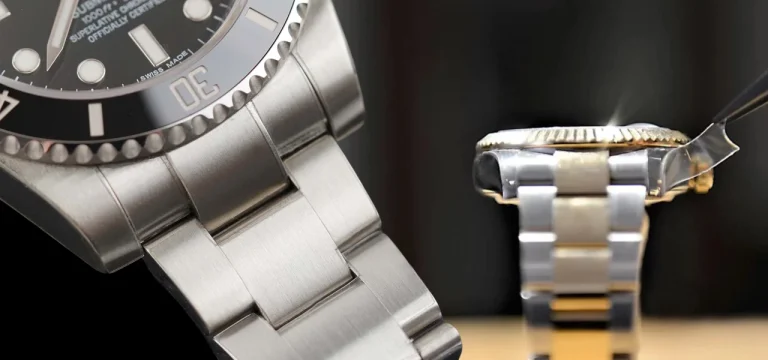
- Apply protective film to high-contact areas such as the clasp, bracelet, lugs, case sides, and bezel. It helps reduce micro scratches while preserving the look and feel of your timepiece.
- Keep spare links, receipts, service records, warranty cards, box, and papers.
For added protection, Watchskins ultimate protective film combines advanced materials with expert craftsmanship to shield your watch from scratches, scuffs, and signs of wear.
Final Word
Scratches do not always ruin resale value, but their impact depends on severity, location, originality, and overall condition. Light wear and tear is to be expected, while serious damage, over-polishing, missing documentation, or non-original parts can affect how buyers value the watch. If you want to preserve your timepiece for the long run, careful handling, proper storage, and protective solutions can make all the difference.
Key takeaways
- Not all scratches affect resale value equally. Light bracelet or clasp marks are often expected, while deep case, bezel, crystal, or dial damage can lower buyer confidence.
- Originality can matter more than a flawless look. Over-polishing, replacement parts, and altered case shape may hurt the value of the watch more than honest wear.
- Prevention protects long-term value. Proper storage, careful handling, complete documentation, and protective film can help reduce scratch-related loss of value.
With Watchskins’ precision-applied protection film, your luxury watch stays shielded from daily scratches and scuffs while preserving its original finish. Explore Watchskins to learn more about discreet long-term protection.